Travelling with a CPAP machine doesn't have to be a bulky, complicated experience. With the right accessories, you can keep your therapy consistent while packing light — and stress less about the logistics. Here are the accessories that genuinely make a difference when you're on the move.
USB-C Travel Cable
Leave the chunky power brick at home. A compact USB-C cable designed specifically for your CPAP lets you power it directly from any USB-C Power Delivery source — a portable battery, a USB-C wall charger, or even a laptop's power adapter. The cable contains a small onboard chip that converts USB-C's 20V output to the 24V your machine requires.
The weight saving is real: the standard ResMed power supply is around 300g. A USB-C cable weighs a fraction of that. If you're travelling carry-on only, that's a meaningful reduction. It also means you're not hunting for the specific outlet type your power brick needs — any USB-C PD source works.
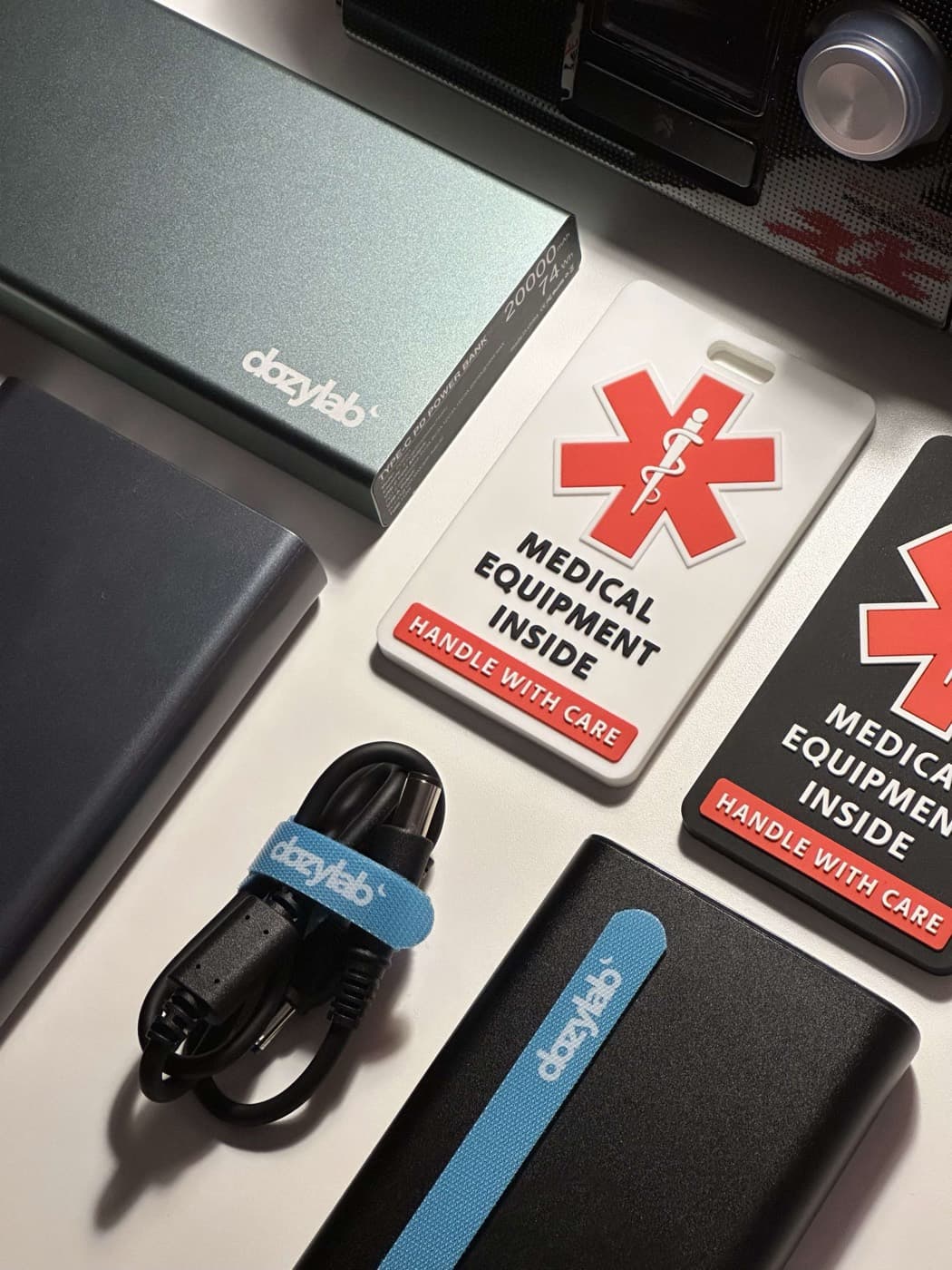
The Dozylab USB-C Travel Cable is compatible with both the ResMed AirMini and AirSense 11, and is the connection between your machine and any USB-C PD power bank.
A High-Capacity USB-C Power Bank
Power your therapy off-grid or during flights with a USB-C PD power bank. This needs to be a bank that specifically outputs 20V — check the spec sheet for a 20V/3.25A or 65W PD output before buying. Standard phone chargers won't work.
A power bank in the 100–160Wh range (the maximum allowed on most airlines in your carry-on) will give you 3–5 hours of runtime without the humidifier, or roughly 2–3 hours with it. For a full night, a 160Wh bank with the humidifier disabled will usually get you there. For consecutive nights without recharging, a larger portable power station is a better option.
CPAP Wipes (Travel-Sized)
Don't rely on hotel sinks for your mask. Travel-sized CPAP wipes let you clean your mask and equipment quickly and hygienically without rinsing — useful in hotel rooms, on planes, in campsites, or anywhere that running water isn't immediately convenient. Look for alcohol-free wipes that are safe for silicone mask cushions.
Cable Organisers
A few reusable velcro cable ties prevent the tangled mess of CPAP tubing, power cable and accessories that's easy to end up with after a few days of packing and unpacking. They weigh almost nothing but make each morning's setup and each evening's pack-down noticeably faster.
The Dozylab Cable Organiser is a 5-pack of reusable silicone wraps designed specifically for keeping travel cables neat. They're small enough to tuck into any bag pocket.
Medical Equipment Luggage Tag
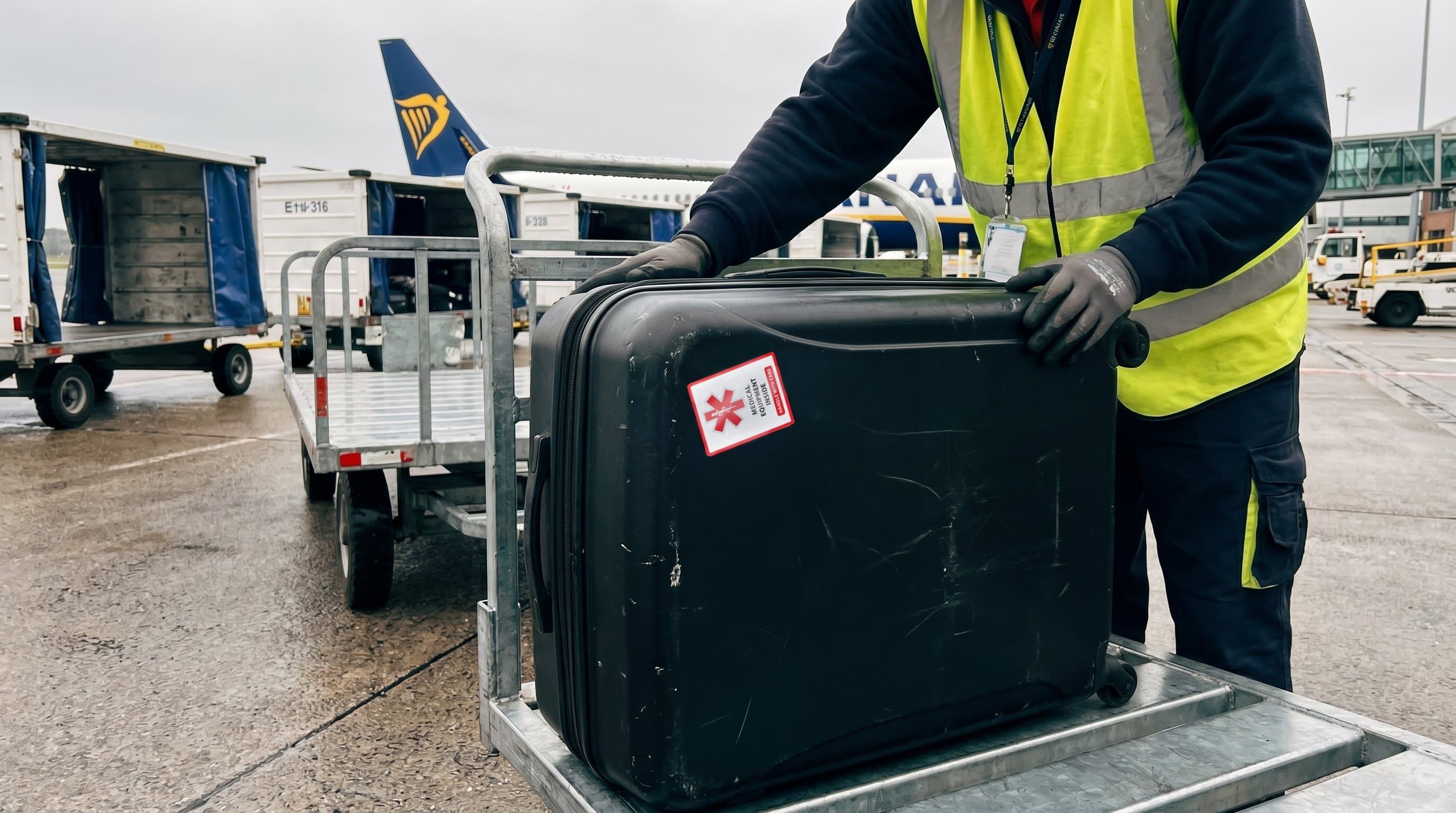
Label your CPAP bag clearly so it's recognised as medical equipment at check-in, security and boarding. A clear medical ID tag helps at security checkpoints (staff recognise it as medical equipment and tend to handle the screening process more efficiently), at airline check-in (signals that the bag needs to be treated as an additional medical carry-on), and if your bag is ever handled separately from you.
The Dozylab Medical Equipment Luggage ID Tag is built for this — durable enough for airport handling, glow-in-the-dark for visibility in dim conditions, and using the correct Rod of Asclepius medical symbol.
Spare Filters and Mask Cushions
Bring one spare filter and a spare mask cushion for any trip longer than a week. They take up almost no space, and having them means a dusty campsite or a worn-out cushion doesn't derail your therapy. Replacing a mask cushion or filter mid-trip is possible in most Australian capitals but unreliable in smaller cities and virtually impossible in remote areas or overseas.
What You Can Leave at Home
If you're using a USB-C cable and power bank, you can leave the standard ResMed power supply at home. It's the heaviest single item in a typical CPAP travel setup, and its only function is to plug into a mains outlet — which the cable and power bank make unnecessary.
If you're staying in hotels with reliable mains power, you might also leave the power bank at home and just pack the cable with a USB-C wall charger you already carry. In that case, your entire CPAP power setup is one cable and one charger — both of which are the size of a phone accessory.
Build a Dedicated CPAP Travel Pouch
The single most useful organisational habit for CPAP travel is keeping everything in one dedicated pouch: cable, filters, wipes, cable ties, spare cushion, physician's letter. It lives in your main travel bag between trips and gets pulled out as-is when you're packing. Nothing gets forgotten because the kit is always assembled.
This approach also speeds up security — the pouch comes out as a single item, the machine comes out separately, and you're through the checkpoint efficiently without rummaging through your bag.