Can You Put a CPAP Machine in Checked Luggage? (And Why You Shouldn't)
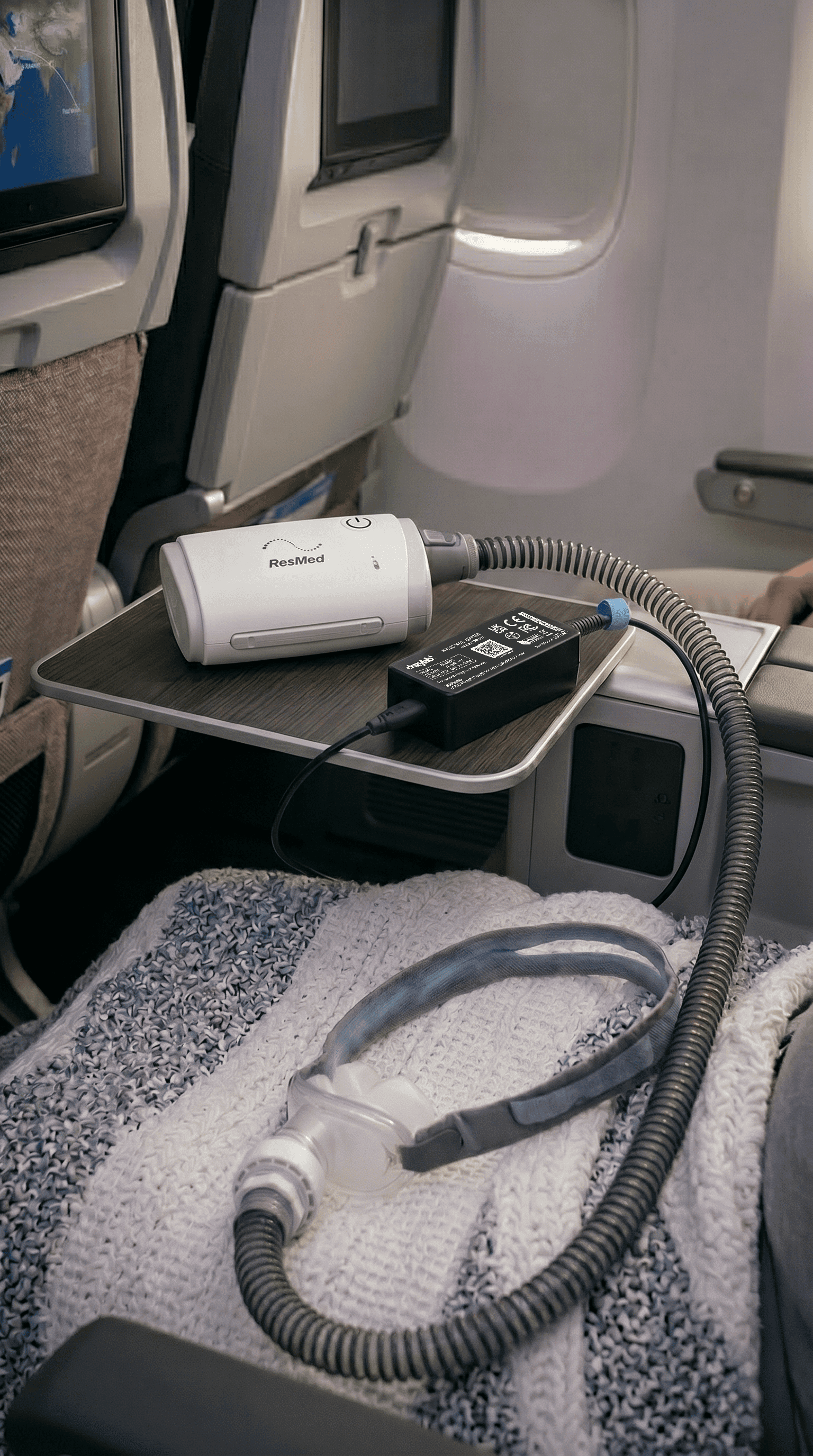
Technically yes, you can put a CPAP machine in checked luggage. The TSA allows CPAP machines in both checked and carry-on bags, and airlines will accept one in the hold. But you should not, and the good news is you never need to: most airlines treat a CPAP as a medical device that does not count toward your carry-on allowance, so carrying it on costs you nothing.
Here is what actually happens to checked CPAP machines, what the airline will and will not cover, and the rare cases where checking one is unavoidable.
Is It Safe to Put a CPAP Machine in Checked Luggage?
Safe-ish, but the risks stack up in one direction. The TSA's own guidance for CPAP machines allows them in checked bags but the standard advice everywhere, including from device makers, is carry-on, for three reasons:
- Damage. Checked bags are thrown, stacked and compressed. A CPAP is a precision blower with a humidifier chamber, and soft-sided CPAP bags offer little protection under a pile of suitcases.
- Loss and delay. Global baggage handling hit a record low of around 5 mishandled bags per 1,000 passengers in 2025, per SITA. That is impressively low and still roughly one bag in every two hundred. Most mishandled bags are delayed rather than lost, which for a CPAP user means exactly the thing you were trying to avoid: a night, or several, without therapy.
- No backup plan. If your checked machine goes missing on arrival, replacing it means finding a CPAP supplier in an unfamiliar city, often with a prescription requirement. A delayed shirt is an inconvenience; a delayed CPAP is untreated sleep apnoea.
Will the Airline Pay if Your CPAP Is Damaged or Lost?
Generally less than you would expect, and sometimes nothing. Airline liability for checked baggage is capped under international conventions, and conditions of carriage typically exclude or limit cover for fragile and valuable items packed in checked bags. Qantas, for example, notes its baggage liability is limited and that it is not liable for damage to baggage that was unsuitably packed. A CPAP machine is precisely the kind of fragile, valuable item those clauses are written about.
Travel insurance may cover the gap, but many policies also apply lower limits or exclusions for items checked into the hold rather than carried. Check your airline's conditions of carriage and your policy wording before relying on either.
The Battery Rules Make Checking Even Worse
If your travel setup includes any lithium battery, the hold is largely off limits anyway:
- Spare batteries and power banks are banned from checked luggage everywhere. The FAA's PackSafe rules are the global template: spares travel in the cabin, always.
- Devices with an installed lithium battery may go in checked bags only if completely switched off and protected from damage, and the FAA still recommends carrying them in the cabin.
So even if you checked the machine, your power bank or CPAP battery would have to ride with you in the cabin. At that point you are splitting one small kit across two bags and keeping the fragile half in the more dangerous one.
The Reason You Never Need to Check It
Here is the part surprisingly few travellers know: on most airlines, a CPAP in its own bag does not count toward your carry-on allowance. Qantas, Virgin Australia and Jetstar all treat it as medical equipment above your normal cabin baggage, and the TSA explicitly allows it as an additional item in the US. We cover the airline-by-airline detail in our guide to flying with a CPAP on Australian airlines, and the checkpoint process in our airport security guide.
So checking your CPAP saves you nothing. You give up zero carry-on space by bringing it into the cabin, where it stays with you, arrives when you do, and can even run from a power bank mid-flight if your airline allows in-seat use.
From the Dozylab shop
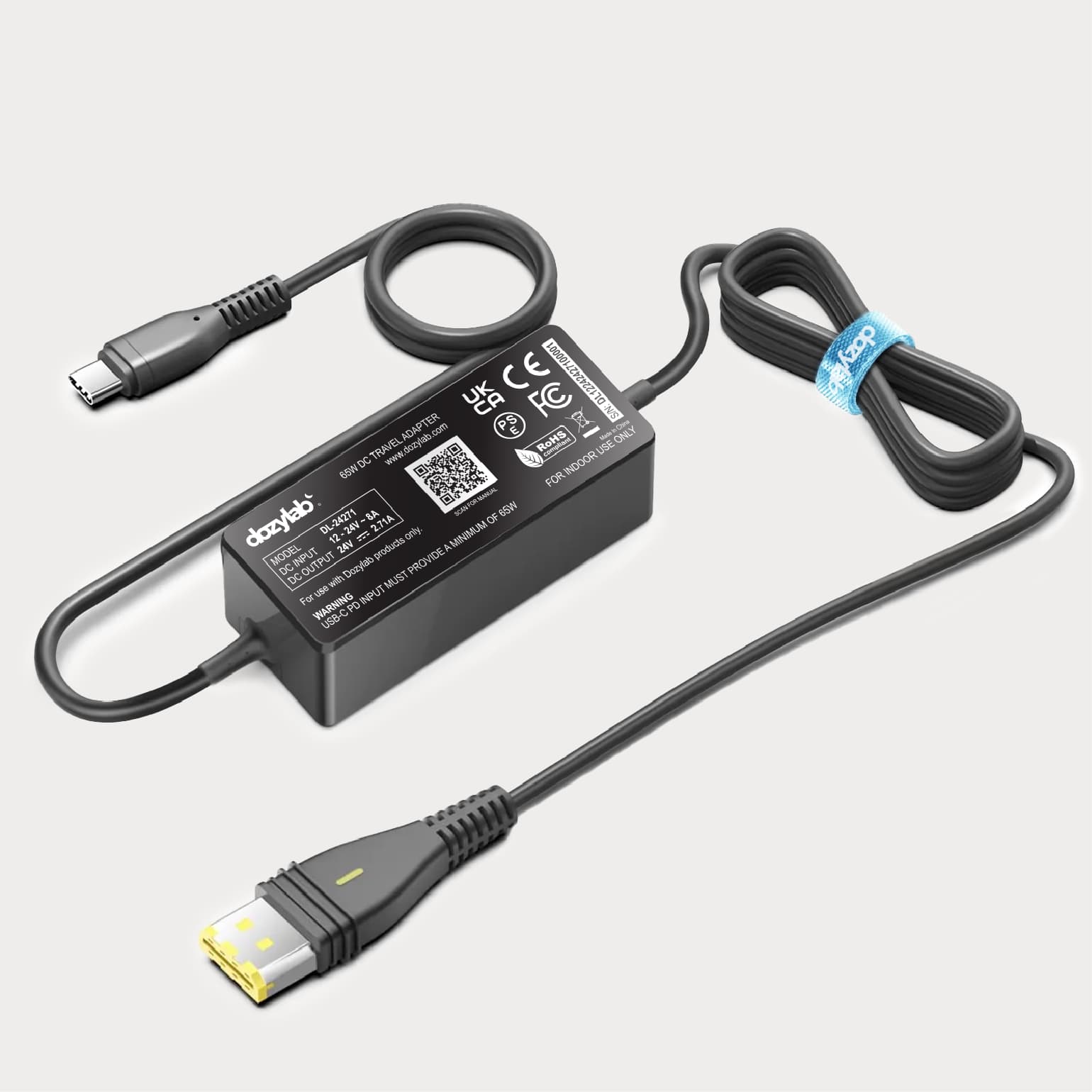
Keep it with you, power it anywhere
The USB-C Travel Cable runs your ResMed AirMini or AirSense 11 from an ordinary PD power bank, so the machine that stays in your carry-on works at the gate, on the plane and wherever you land.
USB-C Travel Cable · $79.95 · View product →
If You Absolutely Must Check It
Sometimes there is no choice: a tiny regional aircraft with no cabin space, or a forced gate check. If your CPAP has to go in the hold:
- Use a hard case, padded on all sides, with the machine immobilised inside.
- Take any battery out and carry it in the cabin; switch the machine fully off (not standby).
- Empty the humidifier chamber completely. Residual water plus rough handling equals a wet machine.
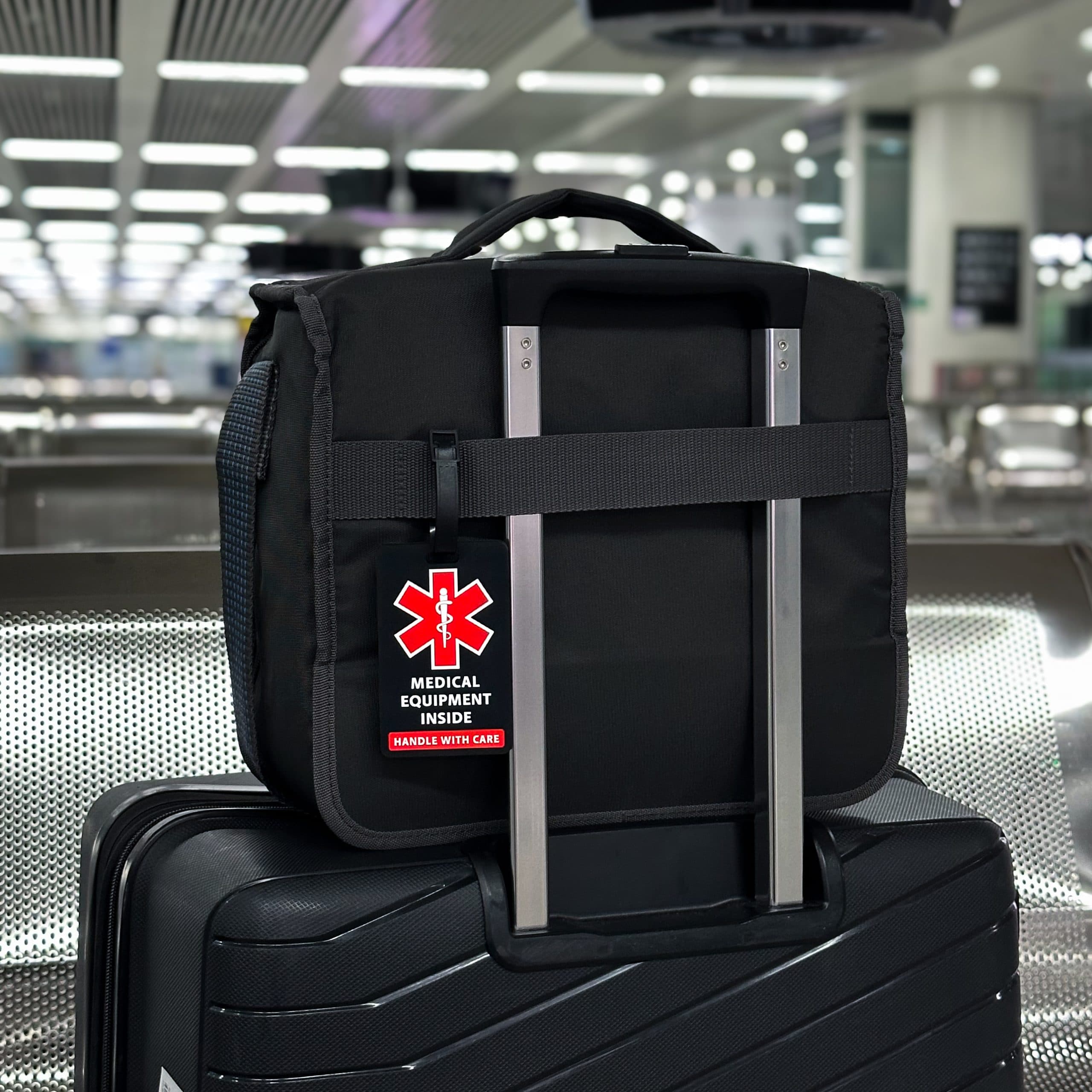
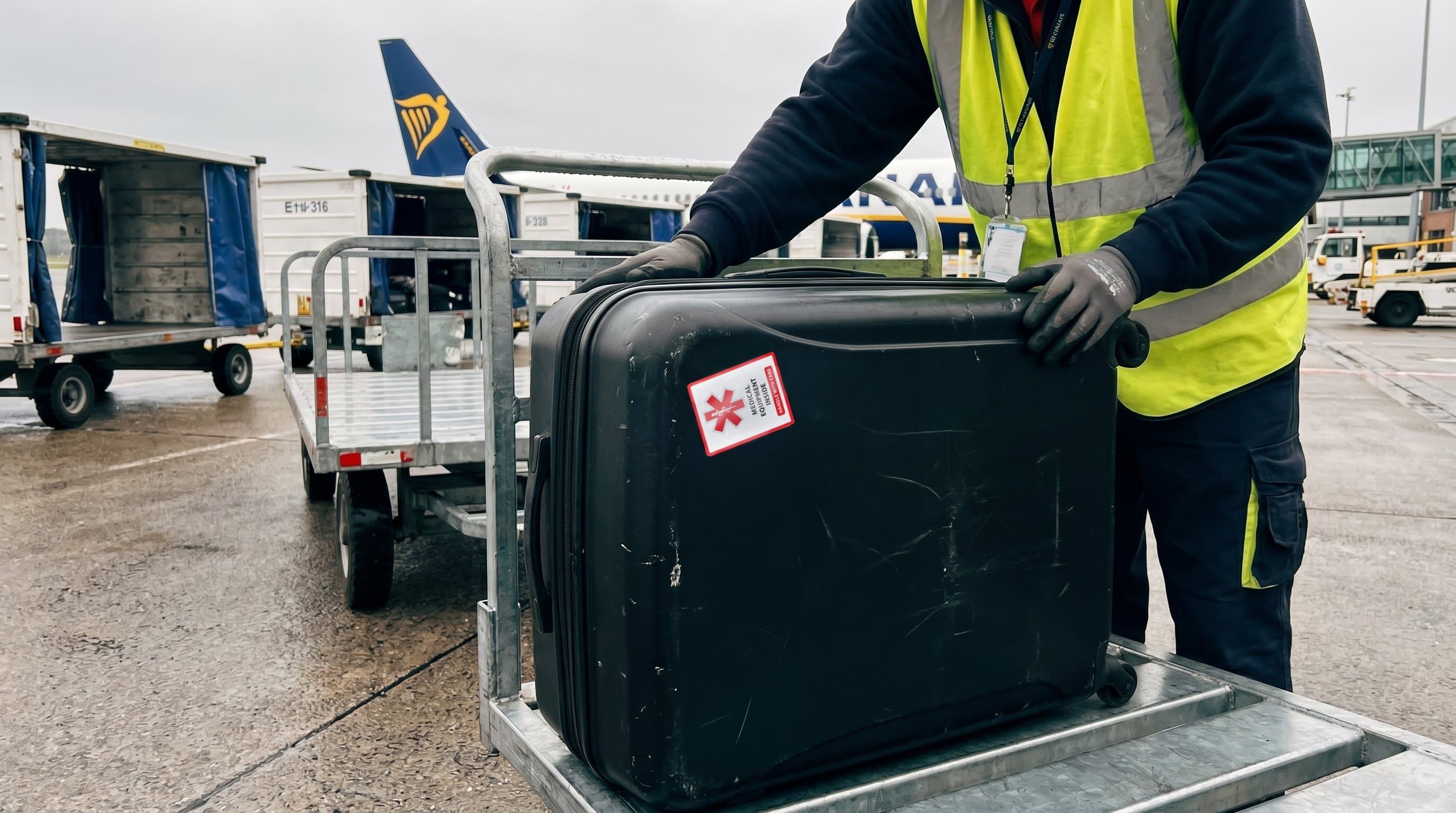
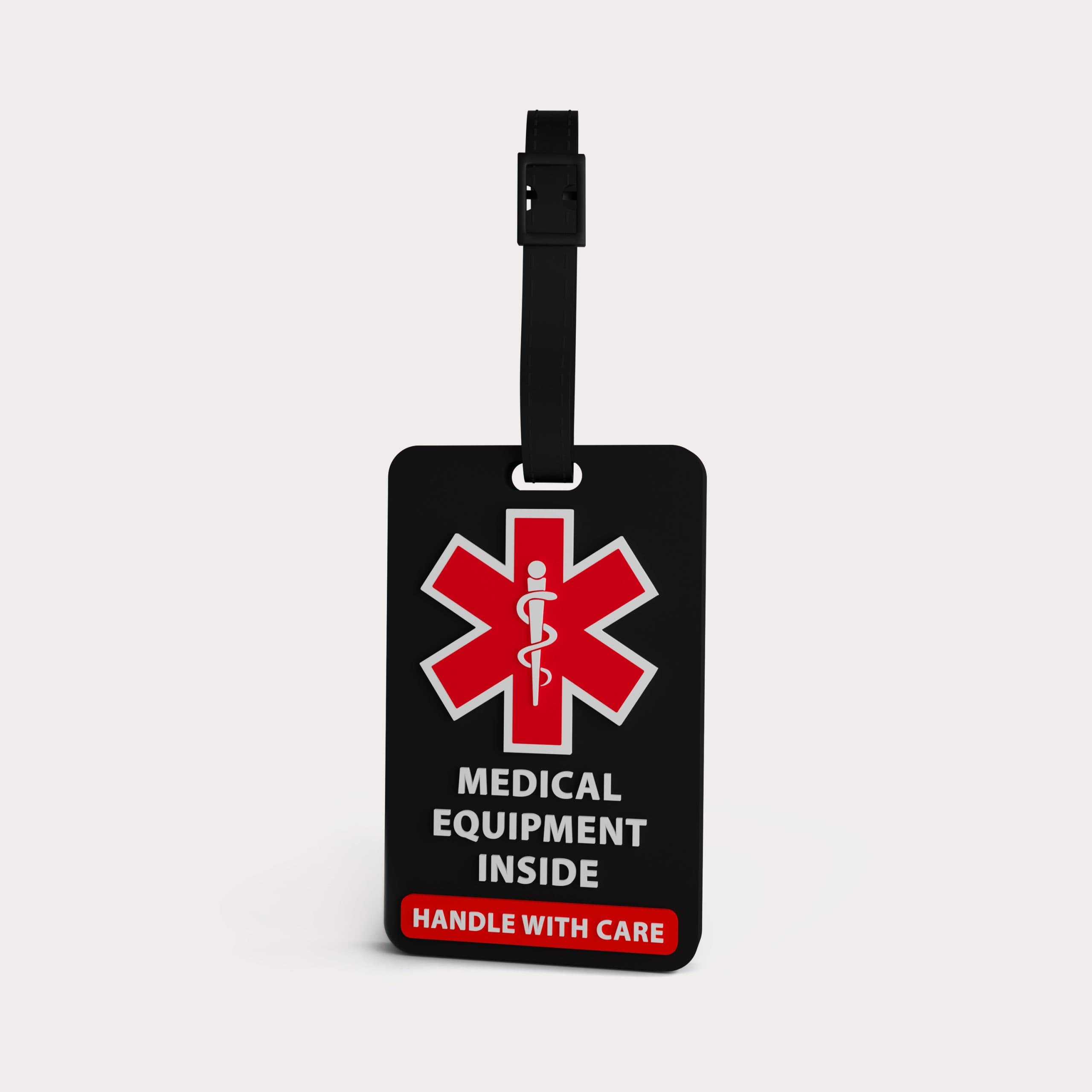
- Put a medical equipment luggage tag on the case so every handler between the belt and the carousel knows it is not just another suitcase.
- Carry your mask and tubing in the cabin. If the machine is delayed, masks work with hired or borrowed machines at your destination.
- Photograph the machine and note its serial number before handing it over, for the damage claim you hopefully never make.
From the Dozylab shop
If it must ride in the hold, label it
A glow-in-the-dark Medical ID Tag tells every baggage handler the case holds medical equipment, the single cheapest thing you can do to change how a checked CPAP gets treated.
Medical ID Luggage Tag · $13.90 · View product →
Frequently Asked Questions
Can you put a CPAP machine in checked luggage?
Yes, technically. The TSA and airlines allow it. But carry-on is strongly recommended: checked bags face rough handling and delay risk, airline liability for fragile items is limited, and a CPAP does not count toward your carry-on allowance anyway.
Does a CPAP machine count as a carry-on?
Generally no. Most airlines, including Qantas, Virgin Australia and Jetstar, treat a CPAP as a medical device carried in addition to your normal cabin allowance. That is why checking it gains you nothing.
Can CPAP batteries go in checked luggage?
Spare batteries and power banks, never; they must travel in the cabin. A battery installed in a device may only be checked if the device is completely off and protected, and regulators still recommend keeping it in carry-on.
What happens if my checked CPAP is damaged or lost?
Airline liability is capped under international conventions, and conditions of carriage generally limit cover for fragile or valuable items in checked bags. You may recover little or nothing, so check your airline's terms and your travel insurance before checking a machine.
Is it better to take a CPAP as carry-on?
Yes, in every case where it is possible. It stays with you, arrives when you do, avoids hold handling, and costs no carry-on space because it is exempt from the allowance on most airlines.
Ryan @ Dozylab
Sources
Every claim in this guide links to an official or industry source. Sources last verified August 2026.
- TSA: Nebulizers, CPAPs, BiPAPs and APAPs (allowed in checked and carry-on bags; screening rules)
- FAA PackSafe: Lithium Batteries (spare batteries and power banks prohibited in checked baggage)
- FAA PackSafe: Portable Electronic Devices Containing Batteries (checked devices must be completely off and protected; carry-on recommended)
- Qantas: Delayed, lost or damaged baggage (liability limited under international conventions; unsuitably packed baggage not covered)
- SITA: Baggage IT Insights (2025 global mishandling rate of roughly 5 bags per 1,000 passengers)
From the Dozylab shop