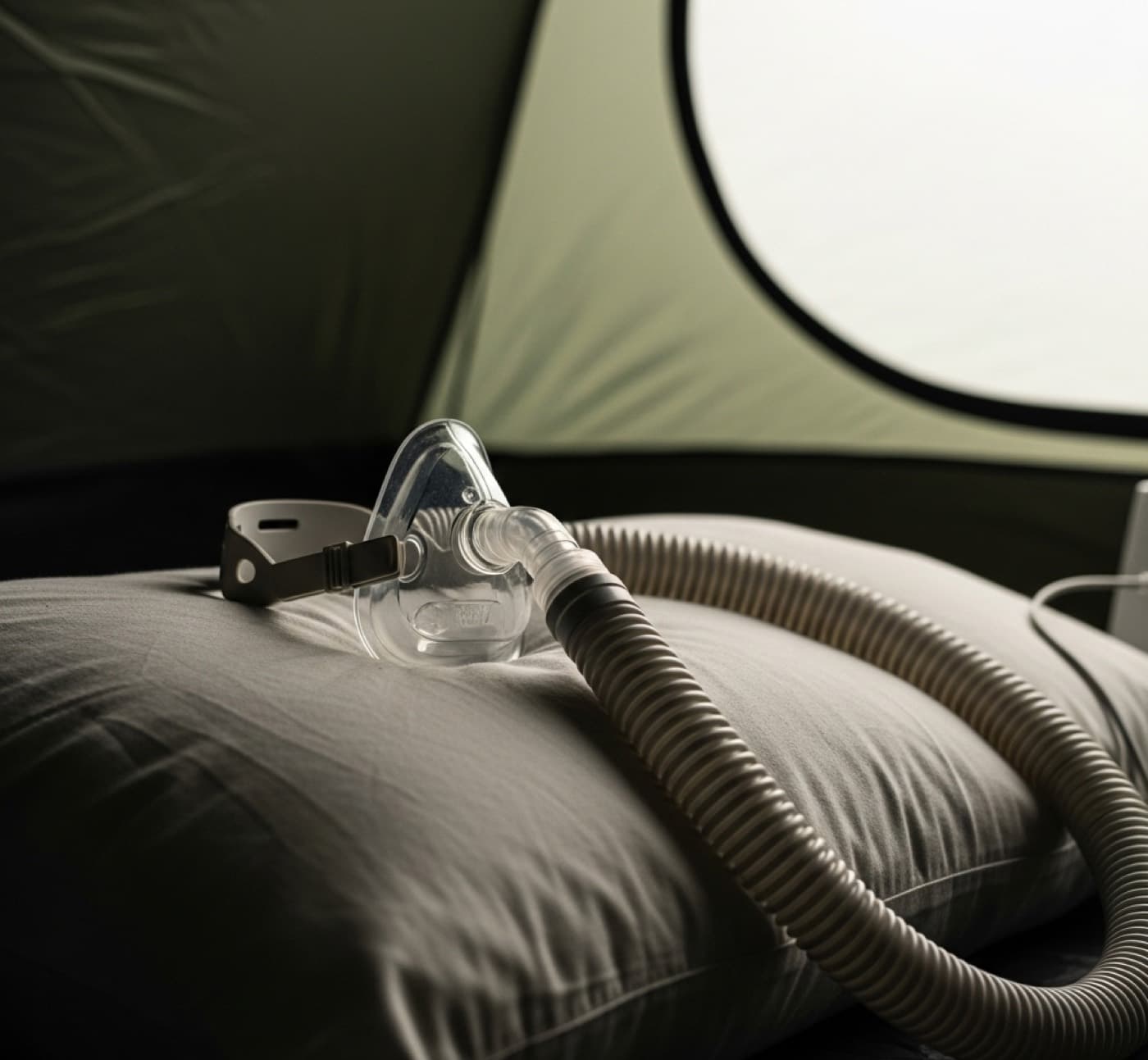
Waking up to the sound of birds, surrounded by nature, with the crisp morning air — camping offers a unique kind of reset. But for CPAP users, the thought of being away from a reliable power socket can feel like a barrier to enjoying the great outdoors.
Good news: it doesn't have to be. With a little planning and the right gear, using your CPAP while camping is not only possible but surprisingly simple. This guide will walk you through everything you need for a restful night under the stars.
The Biggest Hurdle: Power
The most common concern is: "How do I power my machine in a tent?" Thankfully, mains power is no longer a necessity.
- Option 1 — Portable Power Stations: These are large, rechargeable batteries with multiple outlets. A quality power station can run a CPAP machine for several nights on a single charge. They're heavier to transport but useful if you're car camping or travelling in a campervan.
- Option 2 — USB-C Power Banks: The more versatile solution for lightweight travel. By using the Dozylab USB-C Travel Cable, you can connect your AirSense 11 or AirMini directly to a high-capacity USB-C PD power bank. This setup is lighter and more compact than dedicated CPAP batteries, and the power bank charges from a car USB port or solar panel during the day.
Pro tip: Turn off the humidifier and heated tubing when camping. These features consume the most power, and in cool outdoor air you'll often find you don't need them anyway. Disabling the humidifier can roughly double your battery runtime.
Choosing the Right Power Bank for Camping
Not every USB-C power bank will work with your CPAP machine. You specifically need one that supports USB-C Power Delivery (PD) at 20V/3.25A (65W minimum). Check the output spec on the power bank before buying — the 20V line needs to be listed.
For capacity: with the humidifier off, the AirSense 11 draws roughly 25–30W. A 100Wh power bank will give you approximately 3 hours of runtime; a 160Wh bank (the airline-permitted maximum) will give you around 5 hours. For a full 8-hour night, a 240–280Wh portable power station is your best option.
If you're doing multiple nights of camping and can charge during the day from a car or solar panel, a 100–160Wh bank with a top-up charge can cover consecutive nights without a very large battery.
Your Essential Camping CPAP Checklist
- CPAP machine and mask: The core of your setup.
- Power source: A fully charged power bank (100–160Wh for 1–2 nights) or a portable power station for longer trips.
- The right cable: The Dozylab USB-C Travel Cable connects your CPAP to a standard USB-C PD power bank — lighter and more versatile than a dedicated CPAP battery.
- Extra filters: Campsites can be dusty. A clean filter ensures you're breathing clean air through the night.
- CPAP wipes: When you don't have access to a sink and soap, wipes let you clean your mask quickly and hygienically.
- A dry bag or waterproof case: Protect your machine and electronics from morning dew, condensation and unexpected rain.
Campsite Setup for Success
- Find a stable spot: Place your CPAP on a flat, level surface inside your tent — a small folding table, a gear bag or a flat rock. Avoid leaving it directly on the tent floor where it could be knocked over.
- Keep it away from tent walls: Condensation builds on tent walls overnight and can drip. Position your machine away from the sides.
- Do a test run at home first: Before your camping trip, run a full night on battery power at home. This confirms your setup can last the night and removes any anxiety about whether the gear is actually working.
Winter Camping and Cold Weather
Cold weather changes a few things worth knowing. Most CPAP machines operate within a specified temperature range — typically 5°C to 35°C. Very cold nights (below 5°C) can affect machine performance and may cause condensation in the tubing.
If you're camping in cold conditions, consider insulating the tubing with a tube cover or keeping it inside your sleeping bag. Disabling the humidifier is even more sensible in cold weather — the cold air tends to cause more condensation in heated tubing, not less, and dry cool air is often more comfortable than damp air at low temperatures.
Batteries also lose capacity in the cold. A power bank that delivers 5 hours of runtime at 20°C may deliver noticeably less at 5°C. Keep your power bank inside your sleeping bag or tent where it stays warmer.
Don't Let Sleep Apnoea Hold You Back
Camping is about freedom, adventure and disconnecting from daily routines. Your sleep apnoea doesn't have to be a barrier. With the right portable power setup, consistent therapy on the road is genuinely achievable — and waking up well-rested after a night in the bush is its own reward.