CPAP Power on Cruise Ships: Outlets, Extension Cords and Battery Rules by Cruise Line (2026)
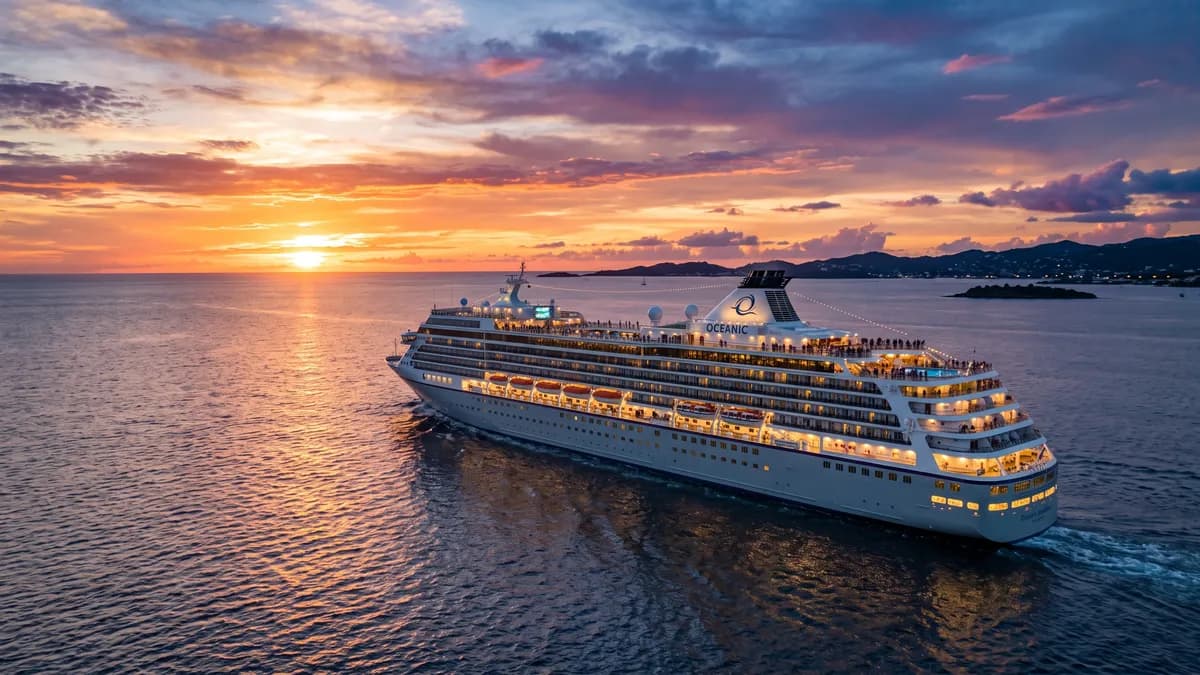
Your CPAP will have power on a cruise. What nobody tells you is that the outlet is almost never beside the bed, and that every cruise line has its own rules about the one thing that would fix that: a cord. Some lines hand you an extension cord for free. Some ask you to bring your own. One will confiscate any power strip at the terminal, while its biggest competitor happily allows them.
This guide covers the cabin power situation line by line, with links to each line's own policy pages so you can verify before you sail. Policies change, so treat this as your starting point and check your line's current page close to your sail date. For the full picture on distilled water, packing and boarding, see our complete guide to taking a CPAP machine on a cruise.
The Quick Comparison
| Cruise line | Power strips / extension cords | What they arrange for CPAP users | Stateroom outlets |
|---|---|---|---|
| Royal Caribbean | Banned outright, including non-surge types (prohibited items policy) | Extension cord and distilled water free via the special needs form, 30+ days out | Typically a mix of 110V US-style and 220V European at the desk (varies by ship) |
| Carnival | Allowed without surge protectors, used with proper caution (restrictions page) | Extension cords and power banks explicitly allowed for CPAP guests (CPAP page) | One desk outlet: 110V 3-prong plus 220V European (electric outlets page); newest ships have three |
| Princess | Non-surge power strips and cords allowed, subject to onboard electrical inspection (pre-cruise FAQ) | Distilled water free via Cruise Personalizer dietary requests | Generally 110V US-style; some ships also 220V |
| Celebrity | Follow their prohibited items list; arrange cords through the Access Department | Extension cord and distilled water free, notify 30+ days out (accessible cruising FAQ) | Typically 110V and 220V at the desk |
| Norwegian (NCL) | Power boards banned (prohibited items); bring your own ~6 ft non-surge extension cord (NCL's CPAP page) | Distilled water free on request, 4+ days out | 110V and 220V, 3-prong |
| Disney | Power strips, extension cords and surge protectors banned for general use | Extension cord and distilled water via Special Services, free | 110V US-style |
The one rule with no exceptions anywhere: nothing with a surge protector. Surge-protection circuitry is treated as a fire risk on a ship's electrical system, and every major line bans it. If your extension cord or power board has a surge light or a reset button, leave it at home.
Why Is Cabin Power Such a Problem for CPAP Users?
Cruise cabins put their outlets where the hairdryer goes, not where you sleep. Carnival states plainly that each stateroom has one outlet, located at the desk. Royal Caribbean, NCL and Princess cabins are similar in practice, with outlets clustered at the desk or vanity that can be several metres from your pillow. Newer ships are better (some new-builds add bedside USB or extra outlets), but you should plan for the worst cabin, not the best one.
That leaves three ways to get power to your bedside: a cord from the cruise line, a cord you bring, or no cord at all (a power bank on the bedside table). Which of those works depends entirely on the line.
Royal Caribbean: They Provide the Cord, You Cannot Bring One
Royal Caribbean is the strictest line on cords and the most generous with CPAP support, which confuses a lot of first-timers.
Their prohibited items policy bans extension cords, power strips and multi-plug outlets outright, with no non-surge exception for general use. Bring one and it will generally be confiscated at the terminal. Certified device and USB chargers are fine.
The medical route is the Guest Special Needs form, submitted at least 30 days before sailing. Royal Caribbean's own wording: "Distilled water and an extension cord will be provided in the stateroom." It costs nothing. If you have not had confirmation within a day or so, their access team is reachable at special_needs@rccl.com.
Carnival (and P&O Australia): The Most Relaxed Cord Rules at Sea
Carnival sits at the other end of the spectrum. Their restrictions page allows power strips, multi plug box outlets and adaptors, and extension cords without surge protectors when used with proper caution, and their CPAP page explicitly allows extension cords and power banks for guests travelling with CPAP machines.
Cabin power itself is modest: one outlet at the desk on most ships, with a 110V 3-prong socket and a 220V European-style socket. Carnival lists three desk outlets on its newest ships. Distilled water is available but sold by the gallon (around US$6 at the time of writing), so bring your own or budget for it.
Australian cruisers: P&O Cruises Australia was folded into Carnival in 2025, and Carnival confirms medical and accessibility requirements carry over with transferred bookings. The Carnival Australia help pages carry the same cord policy as the US site. If you sail from Sydney or Brisbane, a basic Australian power board without surge protection is generally acceptable on Carnival, but re-confirm before you pack it.
Princess: Non-Surge Cords Allowed, Subject to Inspection
Princess permits non-surge power strips and extension cords, with a catch worth knowing: their pre-cruise FAQ notes such devices are allowed when used with proper caution and following inspection and testing by the onboard electrical department. In practice, cruisers report cords sailing through without a second look, but the ship reserves the right to test yours.
For distilled water, use the Cruise Personalizer (Check-In, then Dietary Requests) or email dietaryrequest@princesscruises.com. Cruisers report roughly a gallon provided free. Remind your room steward on day one if it is not waiting in the cabin.
Celebrity: Same Family as Royal Caribbean, Same Approach
Celebrity is part of the Royal Caribbean Group, and its CPAP handling mirrors its sibling: notify them at least 30 days out and an extension cord and distilled water are provided free. Requests go through their Guest Special Needs form or the Access Department at special_needs@celebrity.com. Treat their cord rules as you would Royal Caribbean's: do not pack your own power strip, and let the ship supply the cord.
Norwegian (NCL): Bring Your Own Cord, Their Rules
NCL is the odd one out: they ask you to solve the problem yourself, to their spec. NCL's CPAP page recommends bringing your own extension cord, approximately 6 feet long, in good condition and without a surge protector. A cord that fails their luggage-screening safety inspection may be held for the voyage. They keep a limited number on board, so do not count on borrowing one.
Note the nuance: NCL's general prohibited items list bans power boards, while the CPAP page asks for a plain single-socket extension cord. Bring the simple cord, not a multi-socket board. Stateroom outlets are 110V and 220V with 3-prong sockets, and distilled water is free if requested at least 4 days before sailing.
From the Dozylab shop
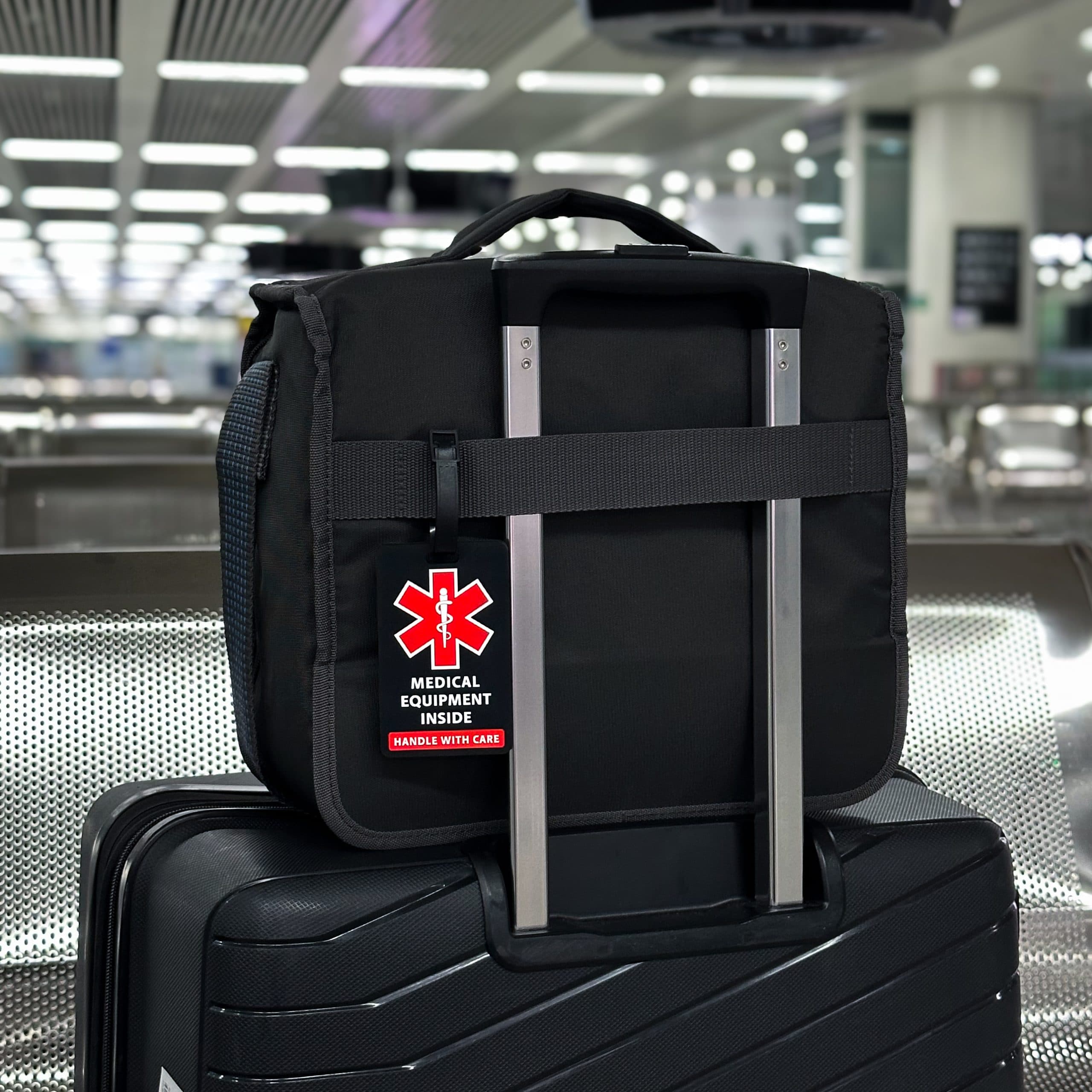
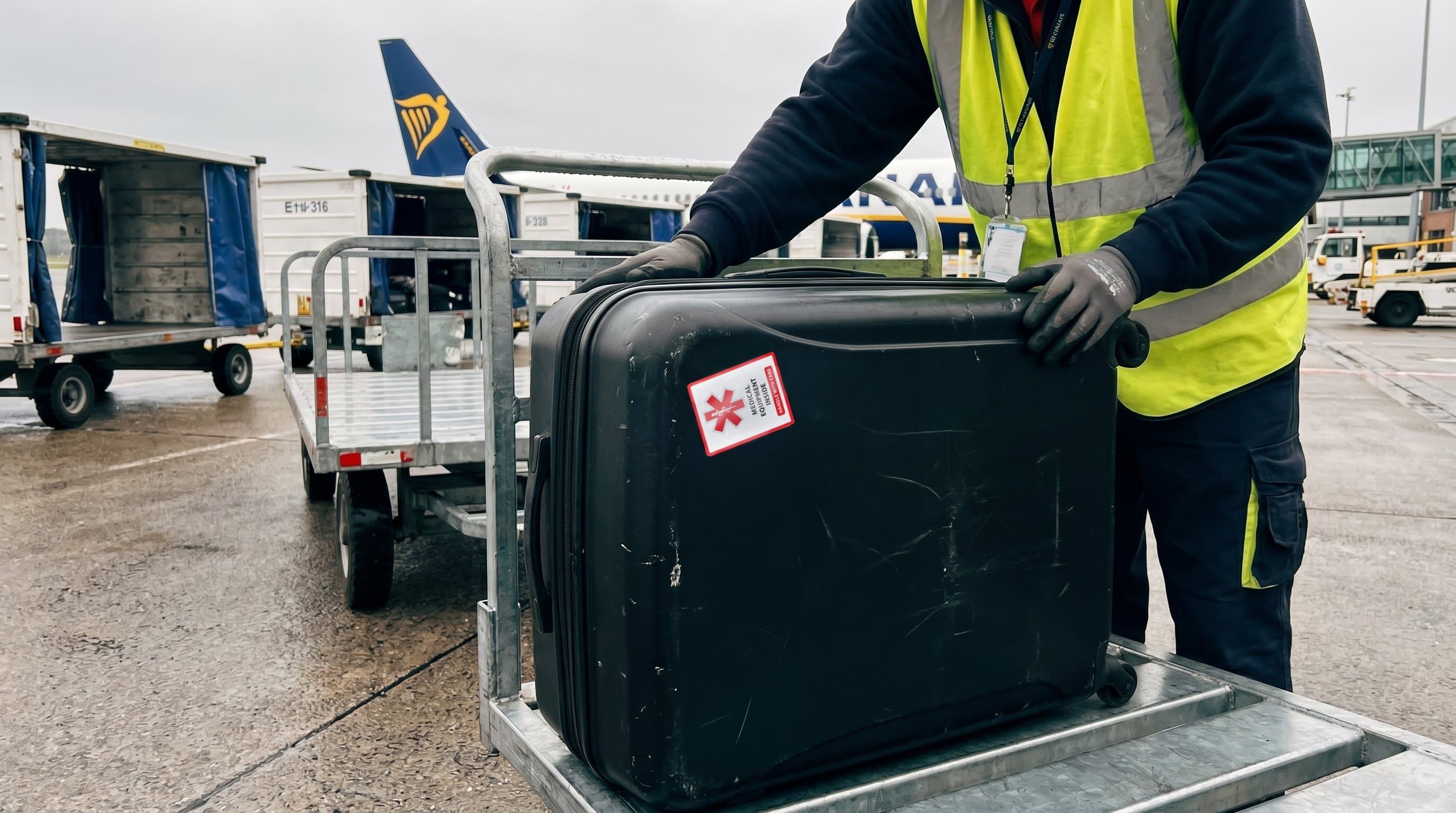
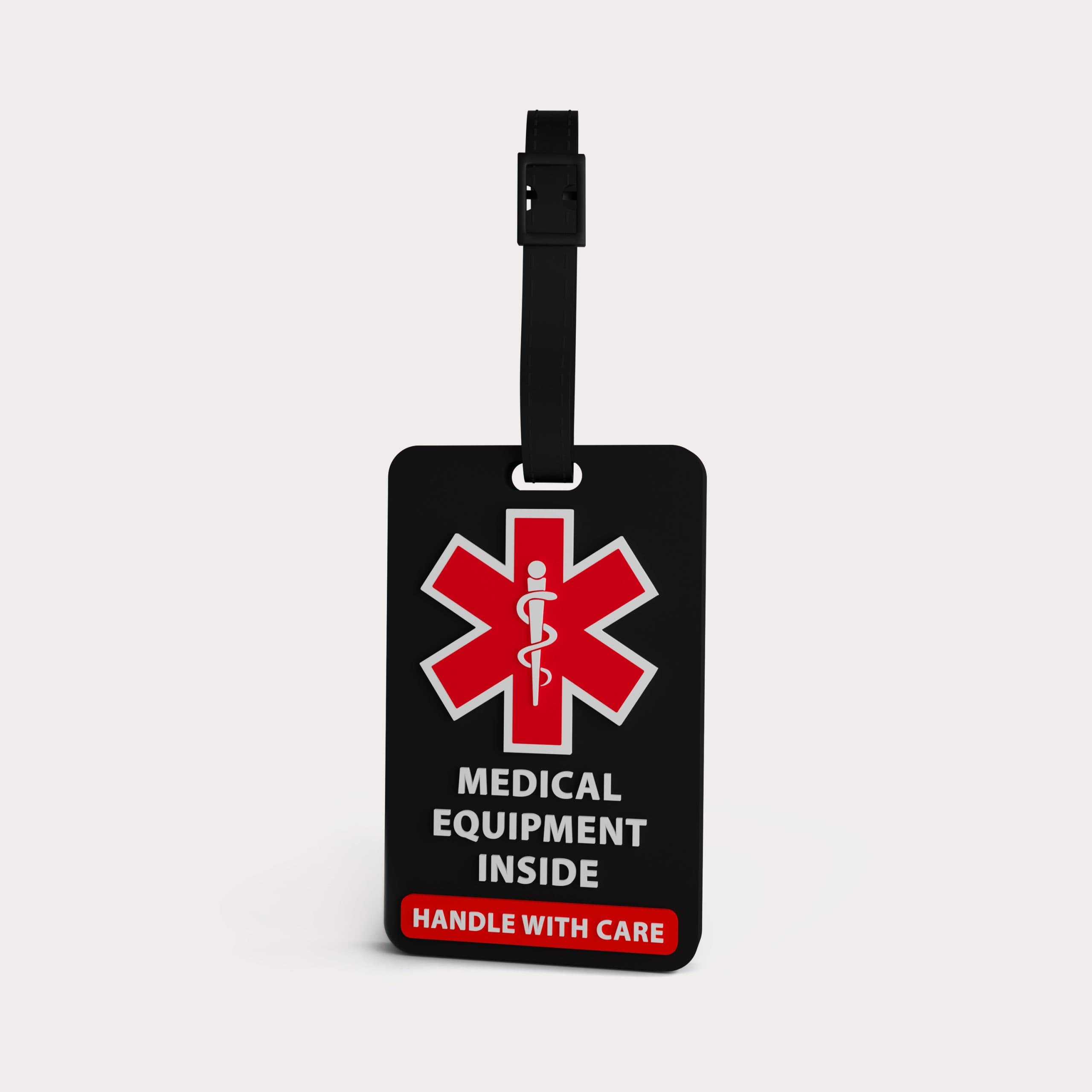
Get your CPAP bag through terminal screening faster
A glow-in-the-dark Medical ID Tag tells terminal staff and baggage handlers there is medical equipment inside, before anyone opens the bag or sets it aside for inspection.
Medical ID Luggage Tag · $13.90 · View product →
Disney: Banned in General, Provided for Medical Use
Disney Cruise Line bans power strips, extension cords and surge protectors for general use. For CPAP users the fix is the Special Services team: per planDisney's official Q&A, an extension cord can be requested for medical devices, along with distilled water, free of charge. Cruisers also report cords available to borrow at Guest Services against a refundable deposit, though supply is first come, first served, which is one more reason to request ahead. Disney ships are typically 110V US-style only, so Australian cruisers need a plug adapter.
Can You Bring a Power Strip for Your CPAP on Cruise Ships in Australia?
Short answer: it depends on whose ship you board, not where it sails from.
- Carnival (including former P&O Australia ships): yes, a power board or extension cord without surge protection is generally allowed.
- Princess: yes, non-surge only, and the onboard electrical team may inspect it.
- Royal Caribbean and Celebrity sailing from Australia: no. Power strips are banned fleet-wide regardless of home port. Request the medical extension cord instead.
- Any line: anything with surge protection will be confiscated. Most Australian power boards sold today include surge protection, so check the label carefully before packing one.
If you would rather not gamble on cord rules at all, skip the cord entirely (next section).
The Setup That Works on Every Line: A Power Bank at the Bedside
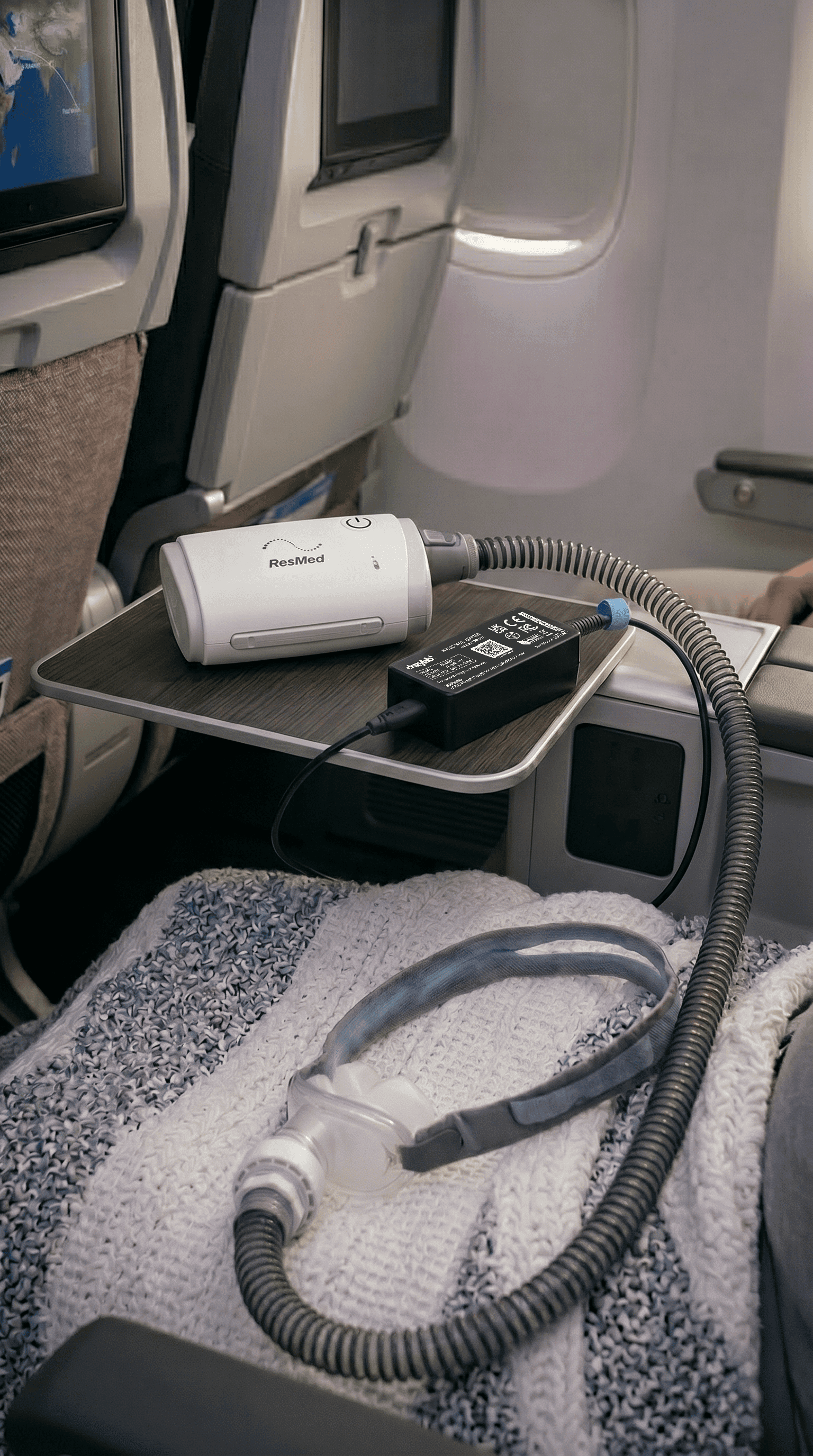
Every rule above exists because cords cross cabins and surge circuitry worries marine engineers. A power bank on your bedside table involves neither. A USB-C power bank with Power Delivery, paired with a USB-C travel cable for the ResMed AirMini or AirSense 11, powers your machine from the bedside table itself. No cord across the floor, no special needs paperwork for the cord, no dependency on whether your line is a Carnival or a Royal Caribbean on the rules.
Recharge the bank from the desk outlet during the day, run your machine from it at night. Three practical rules:
- Keep it under 100Wh. This satisfies the airlines for your flight to the port (no approval needed under CASA and most international rules) and stays comfortably inside what cruise lines accept as a personal device charger. Carry it in hand luggage, never in checked bags.
- Check the 20V Power Delivery spec. The AirSense 11 needs a power bank that supports the 20V PD profile. Our guide to choosing the right power bank for the AirSense 11 shows how to read the label.
- Turn the humidifier off or down to stretch runtime. Sea air is humid, and most cruisers need less humidification than at home. Our CPAP power calculator estimates your machine's draw at your settings.
From the Dozylab shop
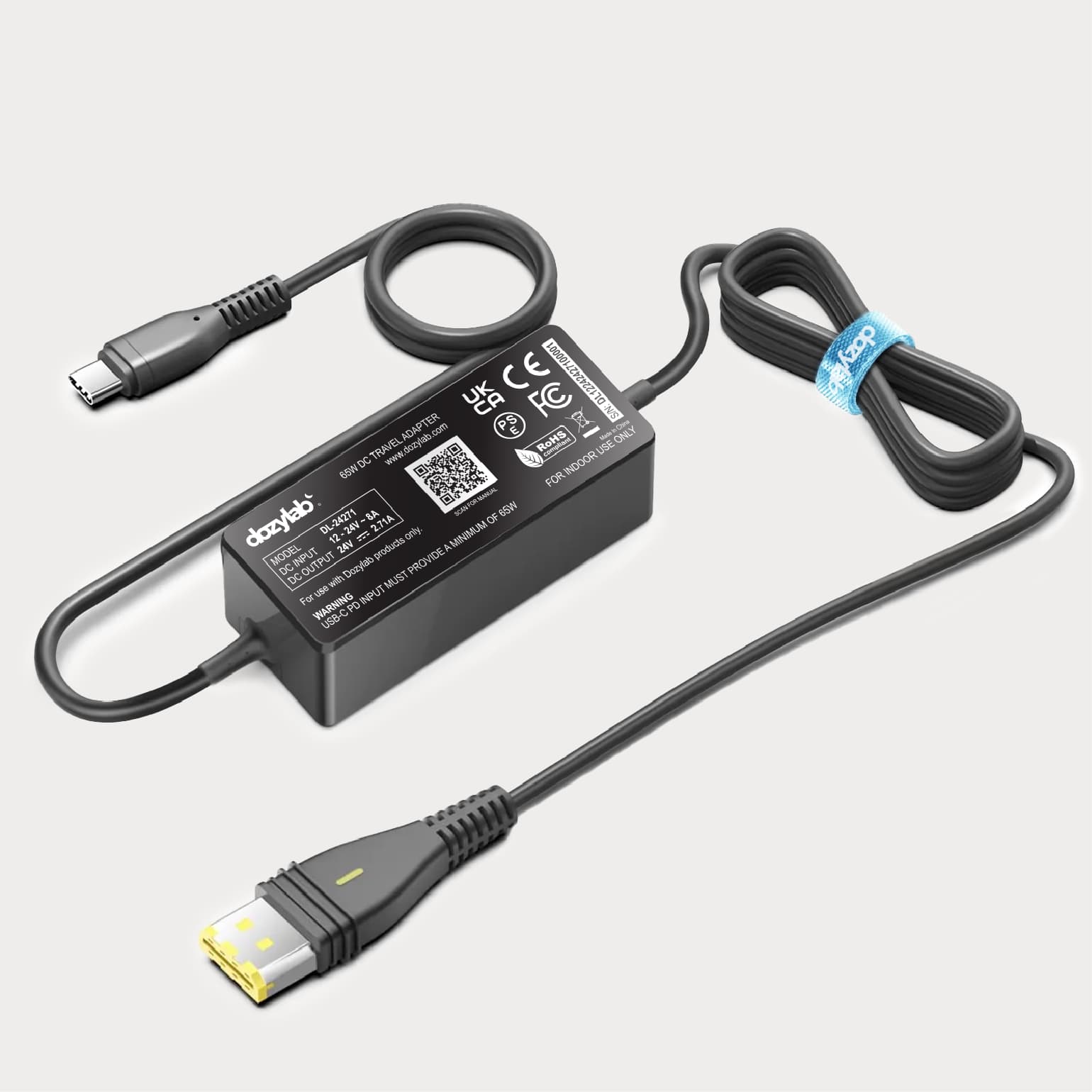
One cable that works on every cruise line
The USB-C Travel Cable runs your ResMed AirMini or AirSense 11 from a standard PD power bank at the bedside. No cord rules, no paperwork, no cable run across the cabin.
USB-C Travel Cable · $79.95 · View product →
A note on onboard charging etiquette that is becoming policy on some lines: charge power banks while you are in the cabin and awake, not unattended, and never use a damaged or swollen bank. Lithium battery fires are the reason all these rules exist.
What About Voltage?
Generally a non-issue for modern machines. Most ships offer 110V US-style sockets, many add 220V European sockets, and every current ResMed, Philips and Fisher & Paykel machine has a universal 100–240V power supply. Check the input label on your machine's power brick to confirm, and pack a plug adapter: Australian plugs do not fit US or European sockets, and Australian-style outlets are rare at sea even on ships based in Sydney.
Frequently Asked Questions
Do cruise ships have outlets near the bed for a CPAP?
Usually not. Most cabins put outlets at the desk or vanity, which can be several metres from the bed. Arrange an extension cord through your cruise line, bring your own where permitted (Carnival, Princess, NCL), or run the machine from a power bank at the bedside.
Are power strips allowed on cruise ships for CPAP machines?
It depends on the line. Carnival and Princess allow power strips and extension cords without surge protectors. Royal Caribbean, Celebrity, NCL and Disney ban them for general use but will arrange or accept a medical extension cord for CPAP use. Surge-protected devices are banned on every major line.
Will a cruise line give me an extension cord for my CPAP?
Royal Caribbean, Celebrity and Disney provide one free when you notify their special needs team in advance. NCL asks you to bring your own ~6 ft non-surge cord. Carnival and Princess let you bring your own.
Can I use a power bank to run my CPAP on a cruise?
Generally yes. Small personal power banks are accepted on the major lines, and Carnival explicitly allows them for CPAP guests. Keep it under 100Wh, carry it in hand luggage, and pair it with a 20V USB-C Power Delivery cable made for your machine.
What voltage are cruise ship outlets?
Most ships offer 110V US-style outlets, and many also have 220V European outlets. Modern CPAP machines accept 100–240V, so voltage is rarely a problem. The plug shape is the real issue: pack a US (and ideally European) plug adapter.
Ryan @ Dozylab
Sources
Every policy claim in this guide links to the cruise line's official page. Details we could only verify from cruiser reports are hedged in the text and listed separately below. Sources last verified August 2026.
- Royal Caribbean: Prohibited Items Policy (extension cords, power strips and multi-plug outlets banned; certified device and USB chargers allowed)
- Royal Caribbean: Guest Special Needs (distilled water and extension cord provided free; 30 day form window)
- Carnival: Restrictions on what you can bring on board (power strips, multi plug outlets and non-surge extension cords allowed with proper caution)
- Carnival: CPAP Machines and Oxygen Equipment (extension cords and power banks allowed for CPAP guests; distilled water sold by the gallon)
- Carnival: Electric Outlets (one desk outlet with 110V and 220V sockets; three on the newest ships)
- Carnival Australia: P&O booking transition FAQ (medical and accessibility requirements carry over)
- Princess: Pre-cruise FAQ (non-surge power strips and extension cords allowed, subject to onboard electrical inspection)
- Celebrity: Accessible Cruising FAQ (extension cord and distilled water provided free with 30 days notice)
- Norwegian Cruise Line: Traveling with C-PAP (bring your own ~6 ft non-surge extension cord; distilled water 4 days ahead; stateroom outlets)
- Norwegian Cruise Line: What can't I bring on board (power boards prohibited)
- Disney planDisney Q&A: extension cord requests and distilled water on board
Cruiser-reported (hedged in the text above):
- Cruise Critic: Distilled water for CPAP on Princess (Cruise Personalizer steps; roughly a gallon provided free)
- Disney Guest Services loaner cords against a refundable deposit: reported by cruisers on planDisney and Disney fan forums; treat as subject to availability
From the Dozylab shop