Flying with Your CPAP on Qantas, Virgin Australia and Jetstar: What You Need to Know
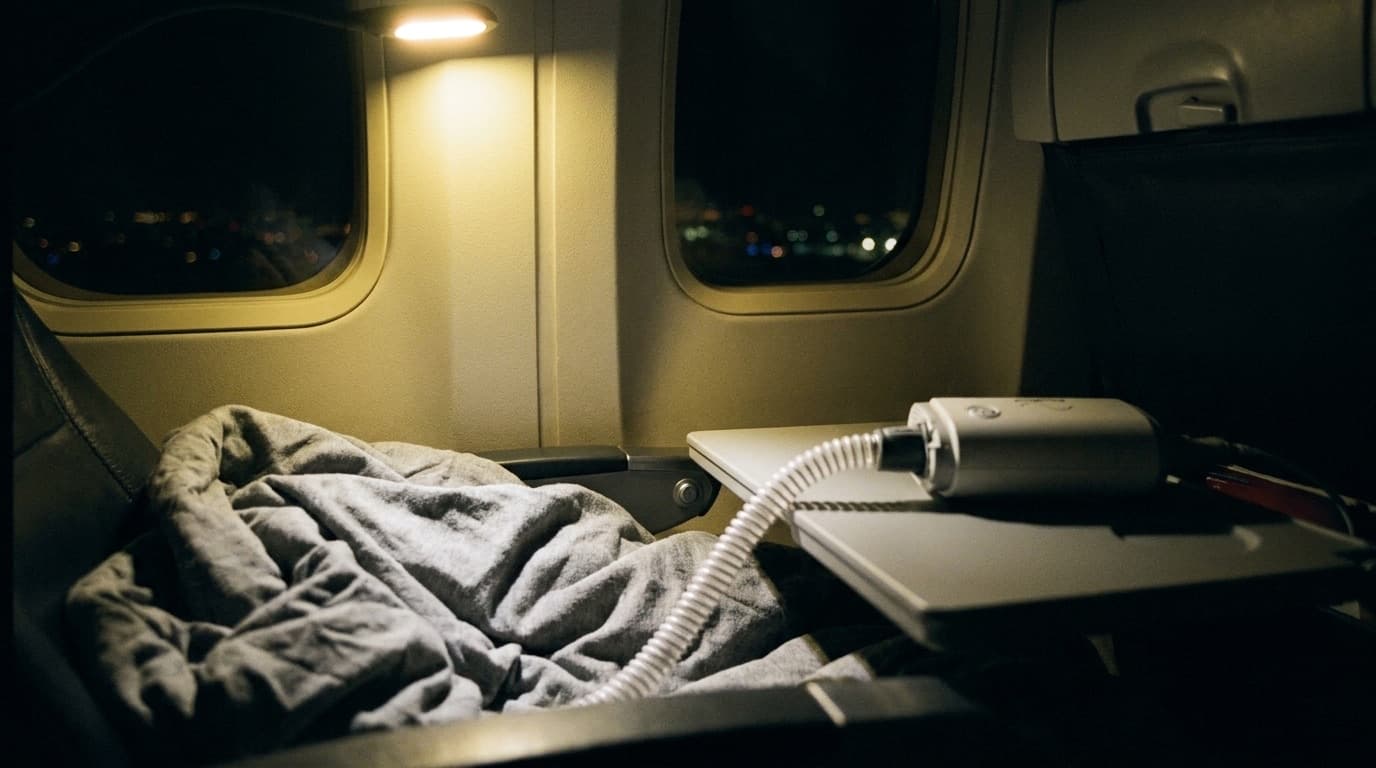
If you use a CPAP machine and you're planning a flight, the good news is that every major Australian airline allows CPAP devices as carry-on medical equipment. The catch is that each carrier has its own policies around documentation, battery rules and what "carry-on" actually means for your situation. Getting caught out at the gate without the right paperwork — or with a battery you didn't realise was restricted — can turn a straightforward trip into a stressful one.
Here's a practical breakdown of what you need to know before you fly with each of Australia's main domestic carriers.
The Universal Rules First
Regardless of which airline you're on, a few rules apply across the board:
- Your CPAP machine counts as a medical device, not a personal item or a piece of standard carry-on luggage. Most airlines will allow it as an extra bag over your standard carry-on allowance — but you need to know to ask.
- At airport security, your CPAP must be removed from its bag and screened separately, just like a laptop. Pack it somewhere accessible and tell the staff at the checkpoint what it is before putting it through the X-ray. We've covered the checkpoint process in detail, including the TSA and Australian rules, in our airport security guide.
- If your CPAP uses a water reservoir for humidification, empty it completely before going through security. Liquids rules apply to the water in your humidifier.
- If you're running your CPAP from a lithium battery or power bank, it must travel in your carry-on only — never in checked luggage. Batteries above 100Wh require airline approval; most portable CPAP batteries fall in the 100–160Wh range, so check the spec sheet.
Carrying a letter from your sleep physician or respiratory specialist confirming you require CPAP therapy is optional on most routes — but it removes any ambiguity at check-in and can be genuinely useful on international flights where staff may be less familiar with the equipment.
Qantas
Qantas is the most CPAP-friendly of the major Australian carriers, largely because they have clear, published policy. Your CPAP device is classified as medical equipment and does not count towards your carry-on allowance. You're allowed to bring it as an additional item in the cabin at no charge.
Qantas recommends notifying them at least 48 hours before departure if you plan to use your CPAP during the flight. Domestic routes generally have power available at most seats on newer aircraft, but it's worth checking when you book. For long-haul international flights, seat power availability varies by aircraft type and cabin class — business and premium economy seats are far more reliably equipped.
For battery-powered operation, Qantas follows the standard CASA rules: batteries up to 100Wh are permitted without approval; batteries between 100–160Wh require airline approval (which Qantas grants routinely when notified in advance). Batteries above 160Wh are not permitted.
Virgin Australia
Virgin Australia's policy is similar to Qantas in that CPAP machines are recognised as medical equipment and are permitted as an additional carry-on item. Their domestic fleet is relatively modern and seat power is available on most aircraft, though again it's worth confirming for your specific route and seat.
Virgin doesn't publish as much detail about CPAP policy on their website as Qantas, which means calling their customer service line before your flight is worthwhile — particularly if you want written confirmation that your device will be boarded as an extra item. Their staff are generally well-informed about medical equipment needs.
The same lithium battery rules apply: up to 100Wh no questions asked, 100–160Wh with approval, nothing above 160Wh in either the cabin or the hold.
Jetstar
Jetstar is a budget carrier and their carry-on allowances are stricter than Qantas or Virgin by design. That said, they do recognise CPAP machines as medical equipment and allow them as an additional carry-on item on top of your standard cabin bag — but this requires advance notification. Don't assume it's automatic.
Call Jetstar's special assistance line before you fly, explain that you travel with a CPAP machine for a diagnosed medical condition, and confirm that the device will be accepted as an extra item. Getting this sorted in advance means no issues at check-in. Trying to sort it at the gate is a much harder conversation.
Jetstar's aircraft often have fewer power outlets in economy than the full-service carriers, so if you're relying on inflight power, check your specific aircraft configuration. Running from a power bank is often the more reliable option on budget routes.
A Note on International Flights from Australia
Most major international carriers — Emirates, Singapore Airlines, Cathay Pacific, Air New Zealand, and others — follow similar conventions to Qantas: CPAP is medical equipment, permitted as an extra carry-on, and they generally appreciate advance notice. The rules become more variable on smaller regional carriers throughout Asia, where calling ahead and carrying a doctor's letter becomes more important.
Making the Process Smoother
A few practical things that make a real difference at the airport:
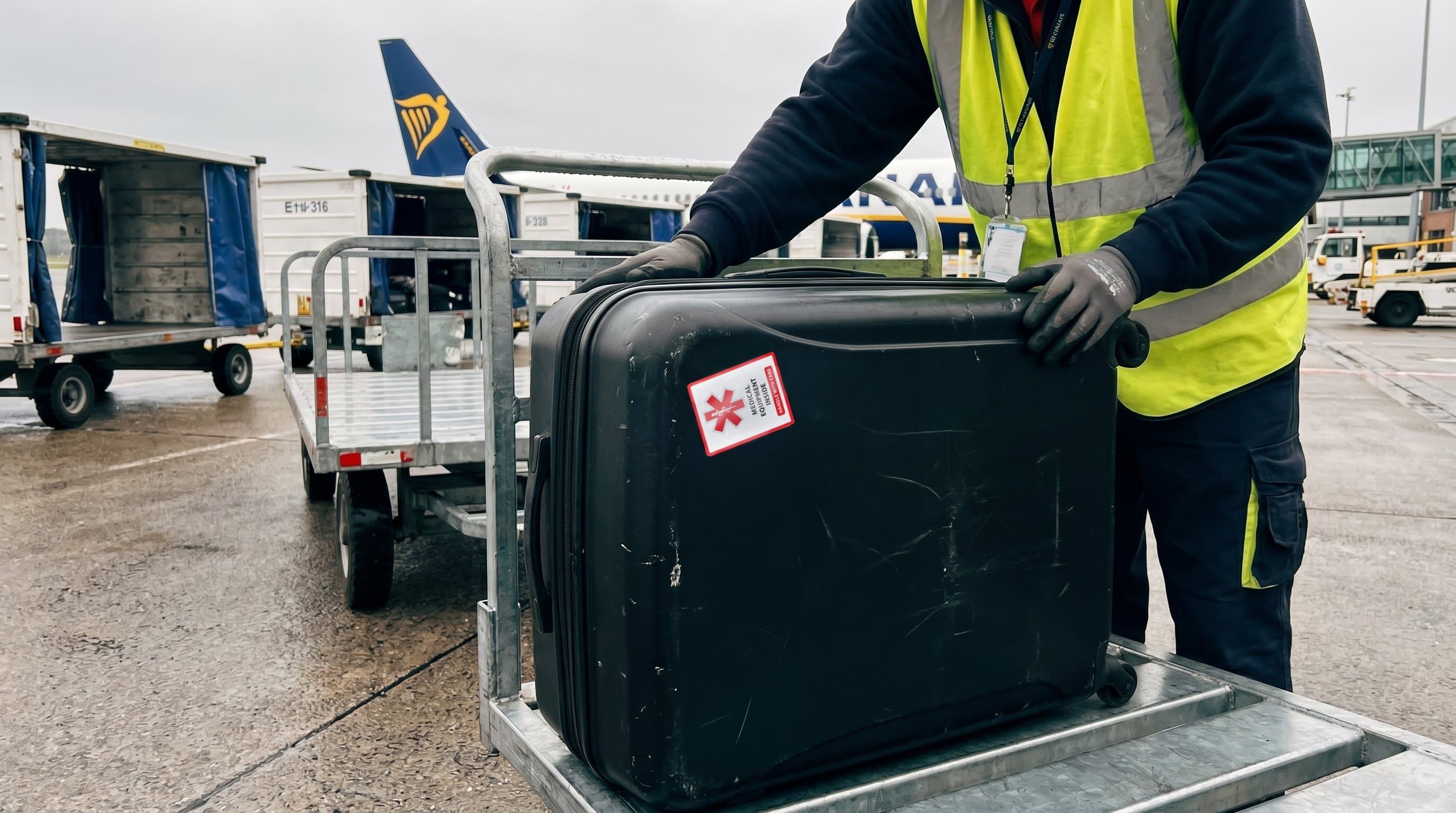
- Use a Medical Equipment Luggage ID Tag on your CPAP bag. It visually communicates to check-in staff, security officers and baggage handlers that the bag contains medical equipment — without you having to explain it every time.
- Keep your CPAP in a dedicated bag or pouch that you can pull out of your main bag quickly at the security checkpoint.
- If you're using a USB-C power bank to run your CPAP, the Dozylab USB-C Travel Cable lets you use a standard PD power bank with your ResMed AirMini or AirSense 11, which is lighter and less bulky than carrying a dedicated CPAP battery.
- Call your airline at least 48 hours before departure to confirm your CPAP is noted on your booking.
With the right preparation, flying with a CPAP is genuinely routine. Most airline staff deal with CPAP travellers regularly — you're not the first person to ask, and you won't be the last.
Flying to a cruise port? Our guide to taking a CPAP machine on a cruise covers distilled water requests, cabin power and what each cruise line provides.