Why Your CPAP Power Cable's Certifications Matter More Than You Think
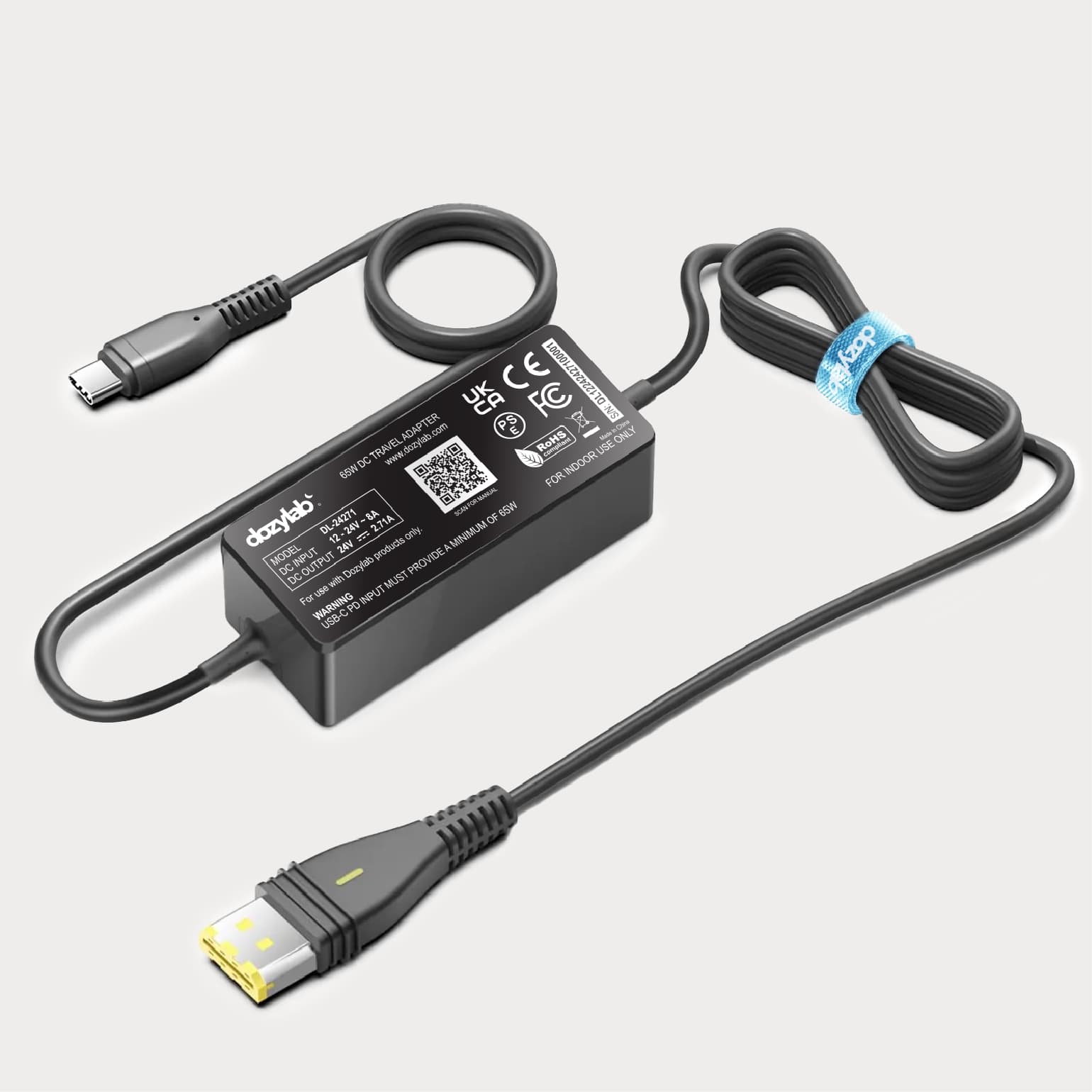
When you're shopping for a CPAP travel cable, the certification marks printed on the packaging — FCC, CE, UKCA, PSE, RoHS — probably look like alphabet soup. But for a device you connect to your CPAP machine every night, those marks are the only independent proof that the cable has been tested by a third party and meets minimum safety standards. Without them, you're trusting the manufacturer completely — and your CPAP machine, your sleep, and your safety are the things at stake.
UKCA
United Kingdom
Electrical safety & EMC compliance
CE
European Union
Safety, health & environmental protection
PSE
Japan
Electrical appliance safety compliance
FCC
United States
Electromagnetic compatibility & emissions
RoHS
Global
No lead, mercury, or hazardous substances
Why certifications matter for medical-adjacent electronics
Your CPAP machine is a precision medical device. It delivers a controlled stream of air at a specific pressure, monitored by sensors and adjusted by software in real time. The power cable connecting it to the wall — or to a battery, a solar panel, or an aircraft seat power port — needs to deliver clean, stable voltage within tight tolerances.
An uncertified cable doesn't just risk failing. It risks failing in ways that damage your machine. Voltage spikes can corrupt firmware. Poor electromagnetic shielding can cause erratic pressure readings. Cheap components can overheat. And unlike a phone charger that you can replace for $15, your CPAP machine is a medical device that costs hundreds to thousands of dollars — and your therapy depends on it working correctly.
Certification doesn't guarantee a cable is perfect. But it does mean an independent body has verified it meets a defined standard — and that the manufacturer was willing to have their product tested.
United States
FCC
The FCC mark (Federal Communications Commission) covers electromagnetic compatibility (EMC) and radio frequency emissions. A cable with FCC authorisation has been tested to confirm it doesn't emit radio frequency interference (RFI) that could disrupt other electronics — and that other electronics are less likely to interfere with it.
This matters more than it sounds. Hotel rooms, aircraft cabins, and hospitals are dense with wireless signals. An unshielded cable acting as an antenna can pick up interference that manifests as erratic pressure delivery. FCC compliance sets a floor for shielding quality — and requires a US-based responsible party accountable if the product causes harm.
European Union
CE
CE marking (Conformité Européenne) is the EU's broadest safety framework, covering the Low Voltage Directive (electrical safety), the EMC Directive (electromagnetic compatibility), and the RoHS Directive (hazardous substances). CE declaration requires maintaining a technical file with test evidence — EU authorities can audit it, and non-compliant products face recalls and fines.
For travellers carrying a CPAP cable into Europe, CE marking also means the cable can legally be sold and used across all 27 EU member states, plus Iceland, Norway, and Liechtenstein. A cable without CE is technically not permitted to be sold in those markets.
United Kingdom
UKCA
UKCA (UK Conformity Assessed) is the UK's post-Brexit equivalent of CE marking. It covers the same technical requirements — electrical safety, EMC, hazardous substances — but applies specifically to Great Britain (England, Scotland, Wales). Northern Ireland still accepts CE.
Products that carry both CE and UKCA are dual-compliant with both the EU and UK regulatory frameworks — a signal that the manufacturer has met two independent sets of requirements rather than one.
Japan
PSE
PSE (Product Safety Electrical Appliance & Material) is Japan's mandatory safety mark for electrical products under the Electrical Appliances and Materials Safety Act. Unlike CE, PSE cannot be self-declared — it requires third-party testing by a registered body, covering leakage current, dielectric strength, and construction standards.
For CPAP travellers heading to Japan, PSE is required for any electrical product distributed there. But beyond compliance, the mandatory third-party testing requirement makes PSE a meaningful construction quality signal in its own right.
Global
RoHS
RoHS (Restriction of Hazardous Substances) compliance means the product has been tested to confirm it doesn't contain harmful levels of lead, mercury, cadmium, hexavalent chromium, or certain flame retardants (PBBs and PBDEs). Thresholds are strict: typically 0.01%–0.1% by weight depending on the substance.
This matters for a device you handle daily. Cables with lead-based solder or cadmium-containing plastics present chronic exposure risks, particularly as the cable ages. RoHS compliance is also a prerequisite for CE marking, which is why compliant products almost always carry both.
Worth knowing
What the absence of certification tells you
Uncertified CPAP cables are widely available at lower prices. Some will work fine — but without certification marks, there is no independent evidence of safety.
No independent testing. The manufacturer alone has decided the product is safe. There is no third-party data.
No accountability. If the cable damages your machine, legal recourse is very limited — especially with overseas sellers on third-party platforms.
Potentially non-compliant at your destination. Travelling to Japan or the EU with an uncertified electrical product means it technically shouldn't be sold there.
Unknown component quality. Certification sets minimum standards for insulation, conductor cross-section, and safety cutoffs. Without that floor, anything goes.
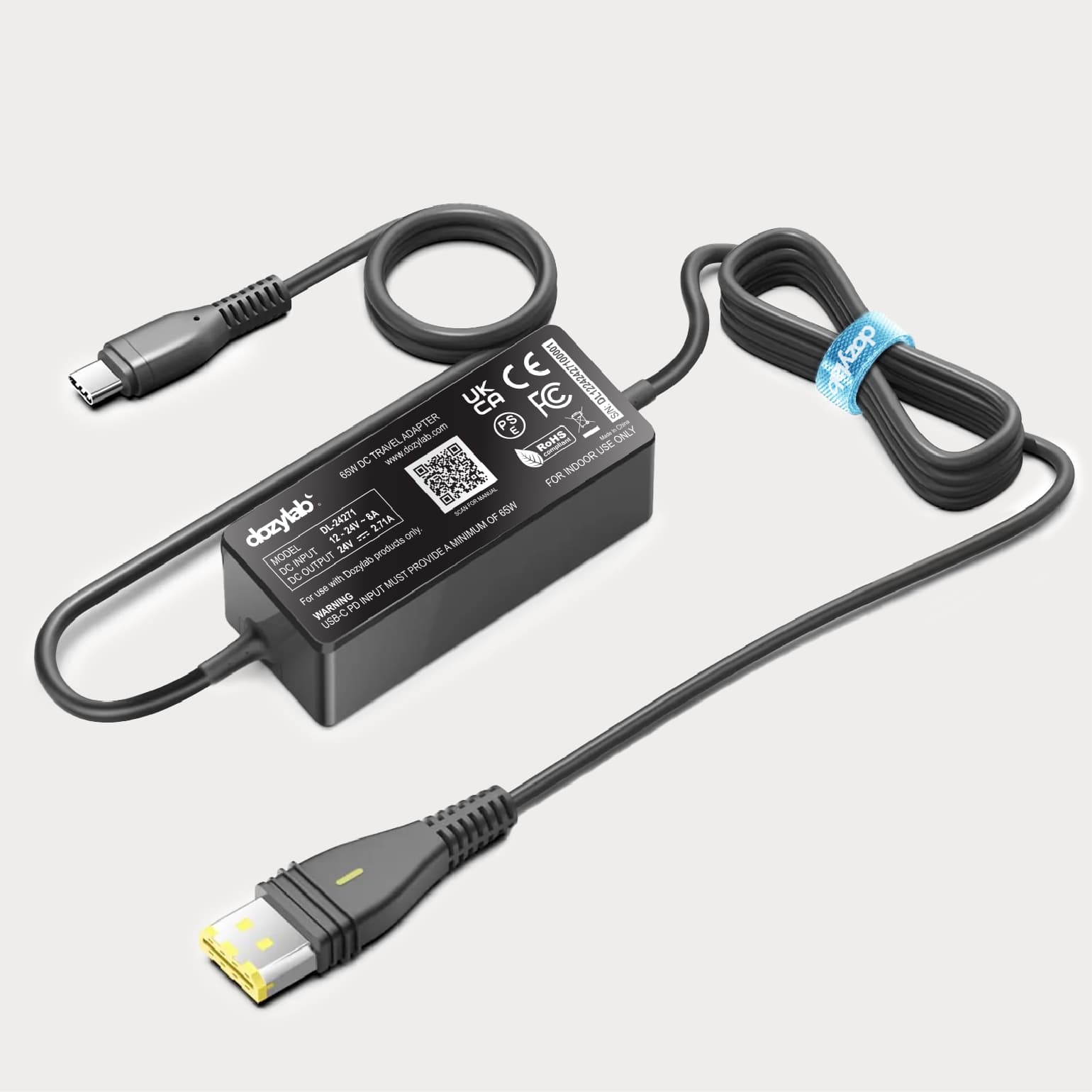
Dozylab
USB-C CPAP Travel Cable
Certified across 4 markets — FCC (US), CE (EU), UKCA (UK), PSE (Japan) — plus RoHS compliance and 5 layers of active protection: over-current, over-voltage, short-circuit, over-charging, and over-heating cutoffs. Compatible with ResMed AirMini and AirSense 11.
UKCA · CE · PSE · FCC · RoHS certified
View the Travel Cable