If you've been diagnosed with sleep apnoea and you travel, you'll quickly notice that the CPAP world has a clear divide: machines designed for home use, and machines designed (or at least well-suited) for the road. The ResMed AirMini and the ResMed AirSense 11 are two of the most popular options for Australian travellers, and they're quite different in practice.
This is a genuine comparison written by CPAP users who travel with both. There's no single right answer: the best machine for travel depends on how you travel.
AirMini vs AirSense 11 at a Glance
| ResMed AirMini | ResMed AirSense 11 | |
|---|---|---|
| Weight | Roughly 300g | Roughly 1.1kg with humidifier |
| Size | Fits in a jacket pocket | About a thick hardback book |
| Humidification | Waterless HumidX cartridges | Integrated heated humidifier with water chamber |
| Typical power draw | 20–30W (no humidifier) | 30–50W depending on settings |
| USB-C power bank support | Yes, via the same USB-C travel cable | Yes, via the same cable |
| Travel extras | 12V DC, altitude-ready, travel accessory ecosystem | Climate control, touchscreen, myAir data |
| Best for | Frequent, light or off-grid travel | Occasional trips; travellers who need consistent humidification |
Size and Weight
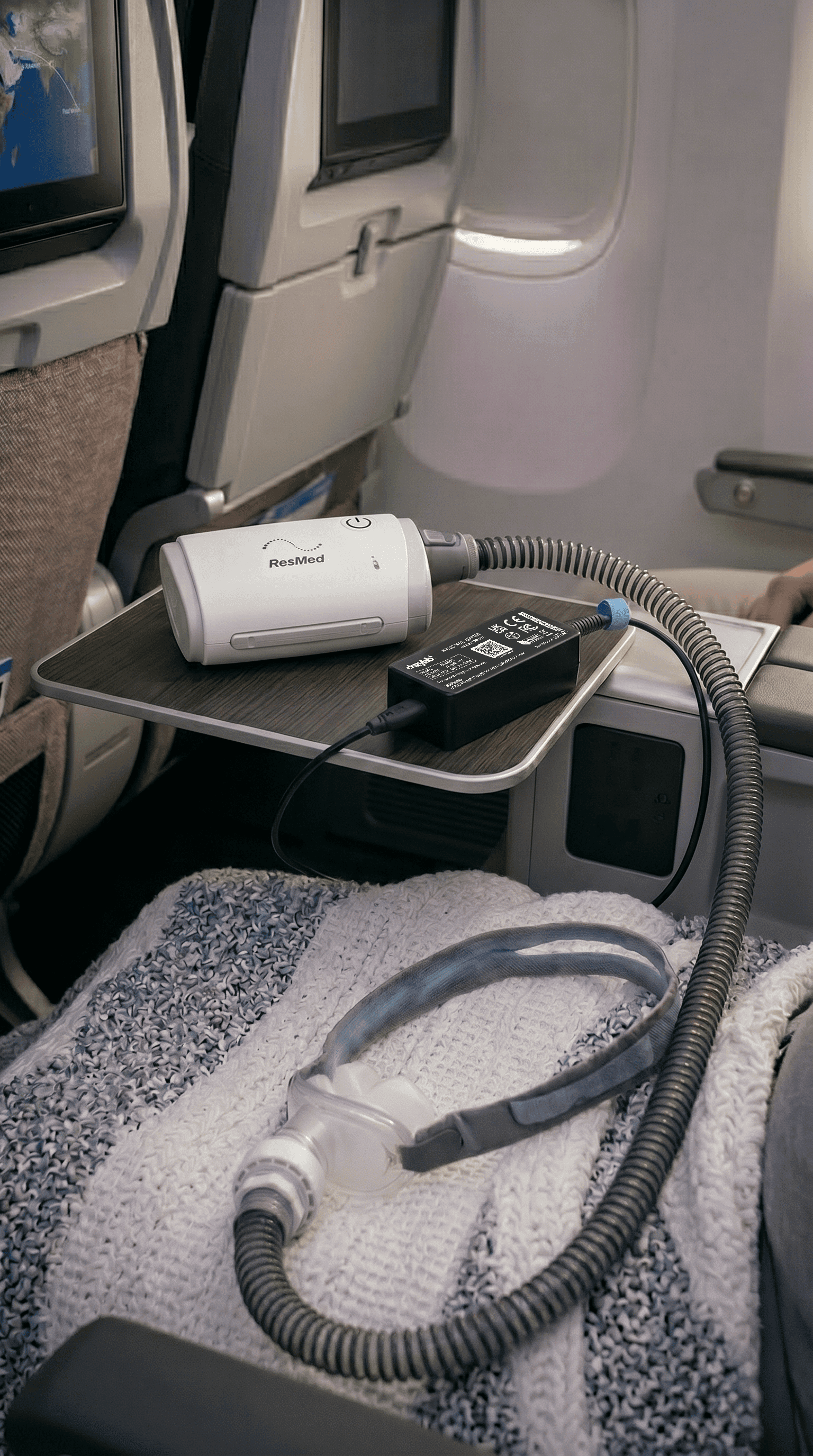
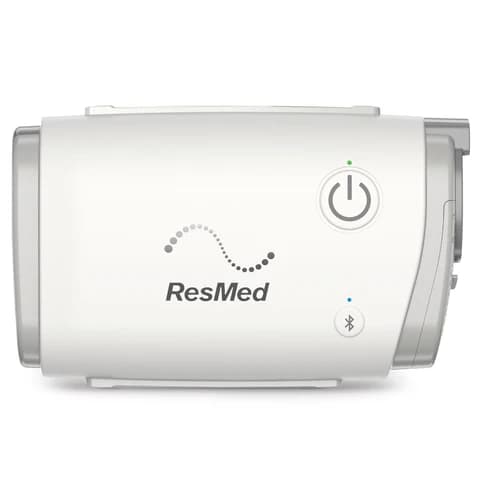
The AirMini is purpose-built for travel. At roughly 300g and about the size of a large orange, it fits easily into a jacket pocket or day pack. It's designed to be the smallest clinically effective CPAP machine ResMed makes.
The AirSense 11 is a full-featured home machine. It weighs around 1.1kg with the humidifier and is roughly the size of a thick hardback book. Compared to the AirMini, it's four times heavier and takes up significantly more space in your carry-on. That said, many travellers are fine with this trade-off. It depends entirely on how much you're packing and how you're travelling.
If you're doing a long weekend with a carry-on only, the AirMini's size advantage is real. If you're packing a large suitcase for a three-week trip, the size difference matters less.
Humidification
The AirSense 11 has an integrated heated humidifier with a water chamber, which is the same setup most CPAP users are used to from their home machines. You fill the chamber, set your humidity level, and it runs throughout the night. It works well, and most users find the transition from home to travel seamless.
The AirMini handles humidification differently. It doesn't have a water chamber. Instead, it uses small disposable HumidX cartridges that sit in the mask connector and recycle moisture from your own breath. These are effective for most users in most climates, but they have limitations: they don't work as well in very dry conditions, and you need to carry and replace the cartridges. Some AirMini users find the humidity level lower than they'd like; others find it perfectly adequate.
If consistent humidification is important to your therapy compliance, the AirSense 11 is the more reliable choice. If you're flexible about humidity or if you've found you can manage without it (many travellers simply turn it off), the AirMini is lighter and simpler.
Power and Battery Compatibility
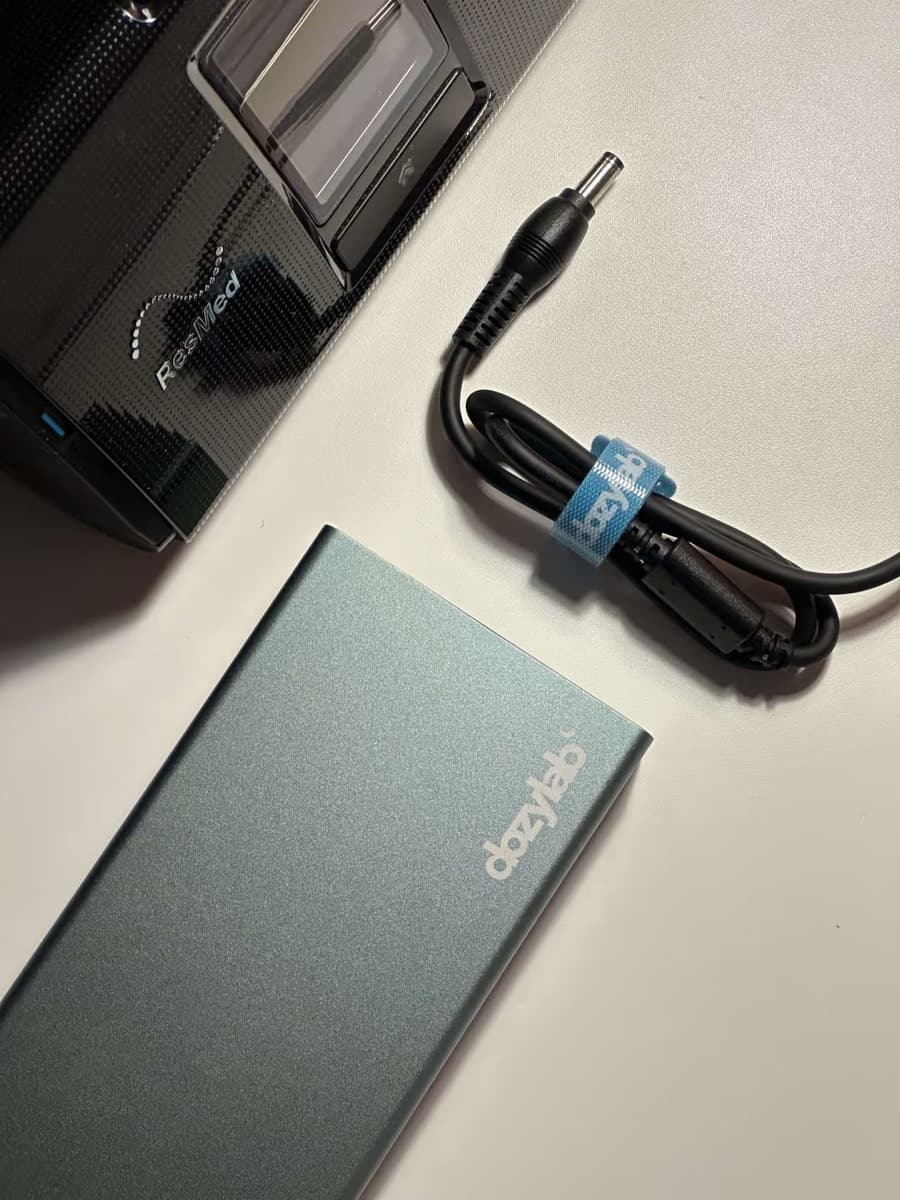
This is one area where both machines are equal: the Dozylab USB-C Travel Cable works with both the AirMini and the AirSense 11. Both machines can be powered from a standard 20V USB-C PD power bank through the same cable, which makes power management on the road simple regardless of which machine you're using.
Where they differ is power consumption. The AirMini draws less power (typically 20–30W without humidification), which means a given power bank will last longer with the AirMini. The AirSense 11 draws 30–50W depending on pressure and humidifier settings. Without the humidifier, the gap narrows considerably.
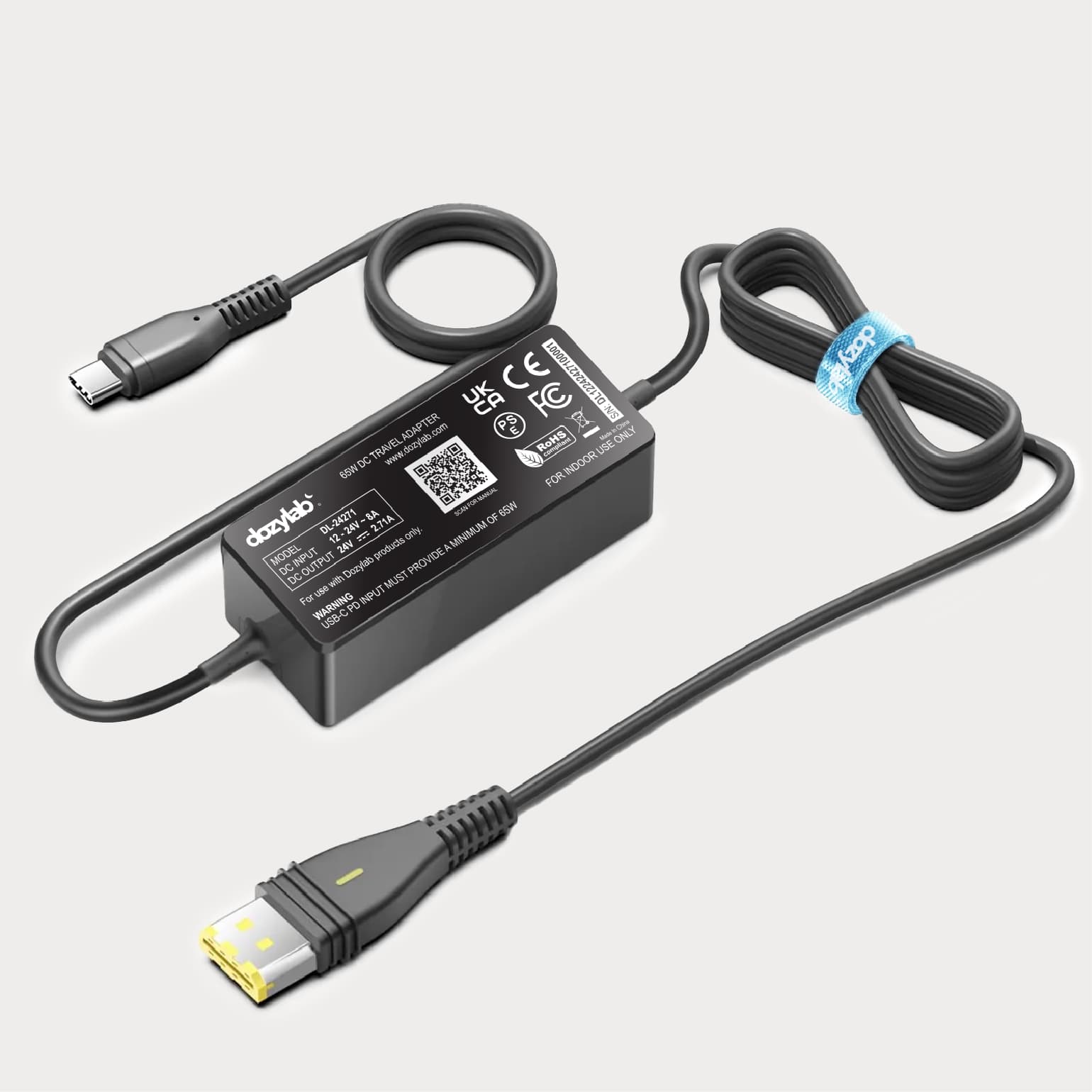
From the Dozylab shop
Whichever you pack, the power setup is the same
The USB-C Travel Cable runs both the AirMini and the AirSense 11 from a standard 20V PD power bank, so your travel power kit works no matter which machine wins.
USB-C Travel Cable · $79.95 · View product →
Travel-Specific Features
The AirMini has a travel mode built in from the ground up: it runs from 12V DC (useful in campervans and cars), is designed to work at altitude, and its entire accessory ecosystem (cases, HumidX filters, mask adapters) is travel-oriented.
The AirSense 11 has a climate control feature that adjusts temperature and humidity based on conditions, a colour touchscreen, and better therapy data access through the myAir app. It's a more sophisticated machine overall, just not specifically designed to be compact.
Which Should You Choose?
There's a simple heuristic: if you travel frequently, travel light, or regularly go off-grid (camping, remote locations, long-haul with limited outlet access), the AirMini's size and lower power draw make it genuinely better suited to the road. The upfront cost is higher than the AirSense 11 and the humidification compromise is real, but for serious travellers, it's often worth it.
If you travel occasionally or don't mind the extra weight, using your AirSense 11 on the road is perfectly sensible. Many people use their home machine exclusively and never feel the need for a dedicated travel device, especially when a good USB-C power bank and cable solution mean you're not dependent on finding the right outlet.
Either way, the cable setup is the same, the security process is the same, and the therapy outcomes are clinically equivalent. The choice really comes down to how much you value compactness.
Planning a specific trip? We've also covered flying with your CPAP on Australian airlines and taking a CPAP machine on a cruise.
Frequently Asked Questions
Is the AirMini as effective as the AirSense 11?
Yes, for the therapy itself. Both deliver clinically equivalent pressure and auto-adjusting algorithms. The differences are comfort and convenience features: humidification style, screen, app data and bulk, not treatment quality.
Can the AirMini replace a home machine?
It can, and some travellers use it as their only machine. Most people treat it as a dedicated travel device, because heavy humidifier users generally sleep better with the AirSense 11's heated water chamber at home.
Do the AirMini and AirSense 11 use the same power cable?
They can. The same USB-C travel cable powers both machines from a standard 20V Power Delivery power bank, so one power kit covers whichever machine you pack.
Which is better for travel?
The AirMini if you travel frequently, pack light or go off-grid: it is a quarter of the weight and draws less power. The AirSense 11 is perfectly sensible for occasional trips where the extra bulk fits your luggage.
Does the AirMini need distilled water?
No. Its waterless HumidX cartridges recycle moisture from your own breath, so there is nothing to fill, refill or request, which is a real advantage on cruises and flights.
Ryan @ Dozylab
Sources
This comparison is based on travelling with both machines. Specifications come from ResMed's official product pages for the AirMini and the AirSense 11. Last reviewed August 2026.
From the Dozylab shop