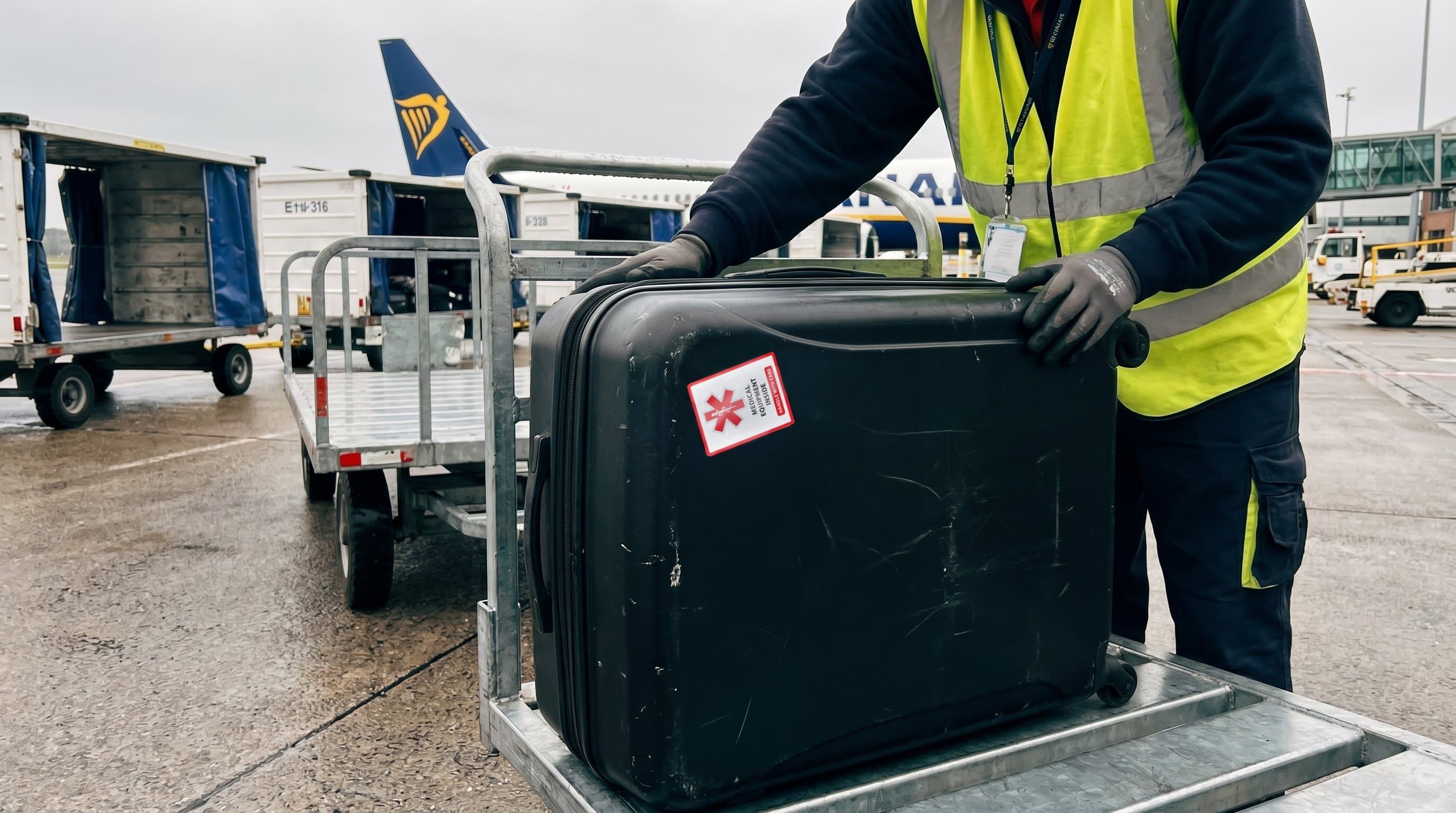
Travelling Internationally with Your CPAP: Voltage, Plug Adapters and What to Check
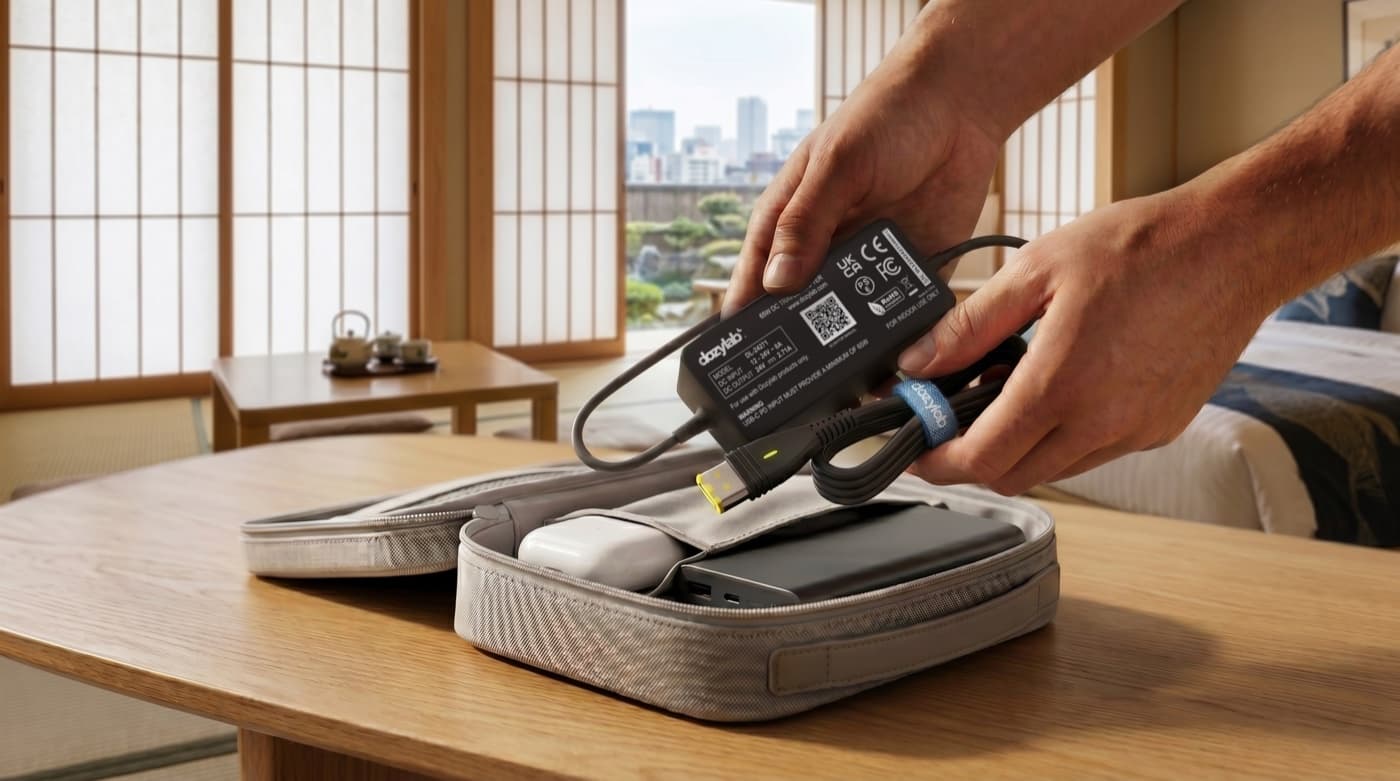
Travelling internationally with a CPAP machine raises a question that trips up many first-time travellers: will my machine work in another country? The short answer is usually yes — but there are a few things worth verifying before you leave, because getting this wrong can damage your machine.
Step One: Check Your Machine's Voltage Rating
The most important thing to do before any international trip is find the voltage specification label on your CPAP machine. It's usually on the bottom, the back panel, or on the power supply brick. Look for the "Input" rating:
- Input: 100–240V, 50/60Hz — your machine has a universal power supply. It will work with any mains voltage in the world. All you need is a plug adapter to fit local outlets. This covers most modern ResMed machines, including the AirSense 10, AirSense 11 and AirMini.
- Input: 120V, 60Hz — this machine is rated for North American voltage only. Connecting it to a 220–240V outlet (as found in Australia, Europe, Asia, the UK) without a voltage converter could damage or destroy it. This is rare in current CPAP machines but does occur with older models.
If you're in any doubt, look up your specific model on the ResMed website or call your sleep clinic. Don't assume — verify.
Adapters vs Converters: Not the Same Thing
This distinction catches a lot of travellers out:
- A plug adapter changes the physical shape of the plug so it fits a different country's outlet. It doesn't change the voltage. If your machine is rated 100–240V, a plug adapter is all you need.
- A voltage converter steps down or steps up the voltage at the outlet. These are bulky, expensive and not always reliable. If your machine is 100–240V, you don't need one. If your machine is 120V only and you're travelling to a 230V country, you would need one — but at that point, you'd be better off borrowing or renting a compatible machine.
Many travellers buy a "universal travel adapter" — these are plug adapters with multiple interchangeable tips. They work well for 100–240V machines. Don't confuse these with voltage converters.
Australian Plugs Abroad: What You'll Encounter
Australia uses Type I plugs (the angled two- or three-pin configuration). Here's what you'll need a plug adapter for:
- USA, Canada, Mexico: Type A/B (flat two- or three-pin, 110–120V). Your machine works fine at 120V if it's 100–240V rated.
- United Kingdom, Ireland, Hong Kong, Singapore: Type G (large rectangular three-pin, 230V).
- Europe (most of continental Europe): Type C/E/F (round two-pin, 220–230V).
- Japan: Type A (same shape as USA, but 100V, 50/60Hz). Modern CPAP machines handle 100V fine if they're 100–240V rated.
- Southeast Asia (Thailand, Vietnam, Indonesia): Variable — many outlets accept both Type A and Type C. A universal adapter covers you.
- New Zealand: Type I — same as Australia. No adapter needed.
A single universal travel adapter (the kind with interchangeable plug tips) handles all of these situations for a 100–240V machine.
The USB-C Alternative
If you use the Dozylab USB-C Travel Cable with a power bank, the voltage and plug adapter question largely disappears. USB-C PD is an international standard — the same power bank works anywhere in the world. You still need to charge the power bank at some point, but most power banks charge from any USB-C source, including the USB-A/C outlets that are increasingly common in hotels and airports worldwide.
For travel to destinations where outlet access is unreliable or plug types are confusing, running from a power bank for one or two nights and then recharging the bank via whatever outlet is available is a practical approach that sidesteps the whole adapter question.
Destination-Specific Notes
Japan
Japan runs on 100V, which is lower than Australia's 230V. 100–240V machines handle this without issue. Japanese outlets are Type A (no adapter needed for Type A plugs, but Australian Type I plugs don't fit). You'll need a Type I to Type A adapter. Japan also has very reliable power infrastructure — outlet access is rarely an issue.
USA
110–120V, which your 100–240V machine handles fine. Plug type is flat two- or three-pin (Type A/B). A simple adapter is all you need. Hotel rooms in the USA almost always have bedside outlets.
Europe
230V, round pins. Your 100–240V machine is happy. A universal adapter handles the plug. The only European country to watch for is Switzerland, which technically uses its own plug type (Type J), though Type C plugs fit Swiss outlets in practice.
Southeast Asia
Voltage is generally 220–240V, which your machine handles. Outlet types vary widely — a universal adapter is essential. Power reliability varies: in major cities (Bangkok, Singapore, KL, Ho Chi Minh City) it's excellent; in rural areas and island destinations, it's worth having a power bank as a backup.
Wherever you're headed, the preparation is straightforward: verify your machine is 100–240V, pack a universal adapter, and consider a power bank for flexibility. That setup covers you for almost every destination in the world.