How Our Customers Are Using the USB-C Travel Cable
When we designed the USB-C Travel Cable, we had a clear picture in mind: a CPAP user in a hotel room, searching behind the bedside table for a spare power outlet, eventually giving up and unplugging the lamp. We wanted to make that unnecessary. One cable, into any USB-C charger, done.
What we didn't anticipate was the variety of situations our customers would use it in. Over the past year, we've heard from CPAP users who've taken the cable to places we never imagined — and solved problems we hadn't considered. Here are five of the most interesting.
Scenario 01
The frequent flyer who ditched the power brick
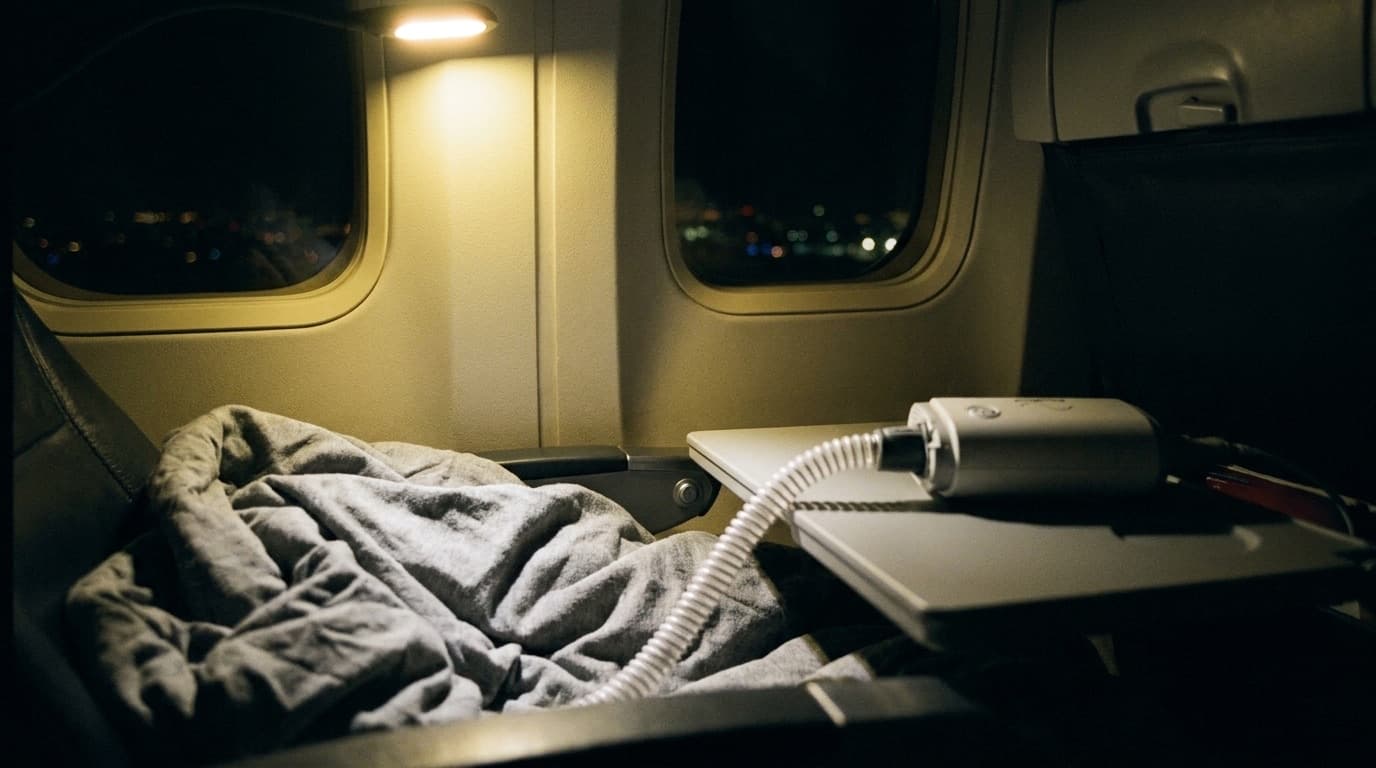
Mark flies for work at least once a fortnight — Sydney to Singapore, Melbourne to Dubai, the usual Pacific corridor. He'd been travelling with an AirSense 11 for three years and had made peace with the power brick and a small collection of plug adapters. The ritual was familiar: find the outlet, locate the adapter, untangle the cord.
Then he switched. Now his entire travel kit charges from a single 100W GaN charger — MacBook, phone, and AirSense 11 — using USB-C cables for all three. The adapters are gone. The power brick is at home. In the overhead locker he has one charger and three cables.
“The mental overhead of packing is just lower,” he told us. “I used to spend five minutes before every trip making sure I had the right adapters. Now I just throw the GaN charger in and go.”
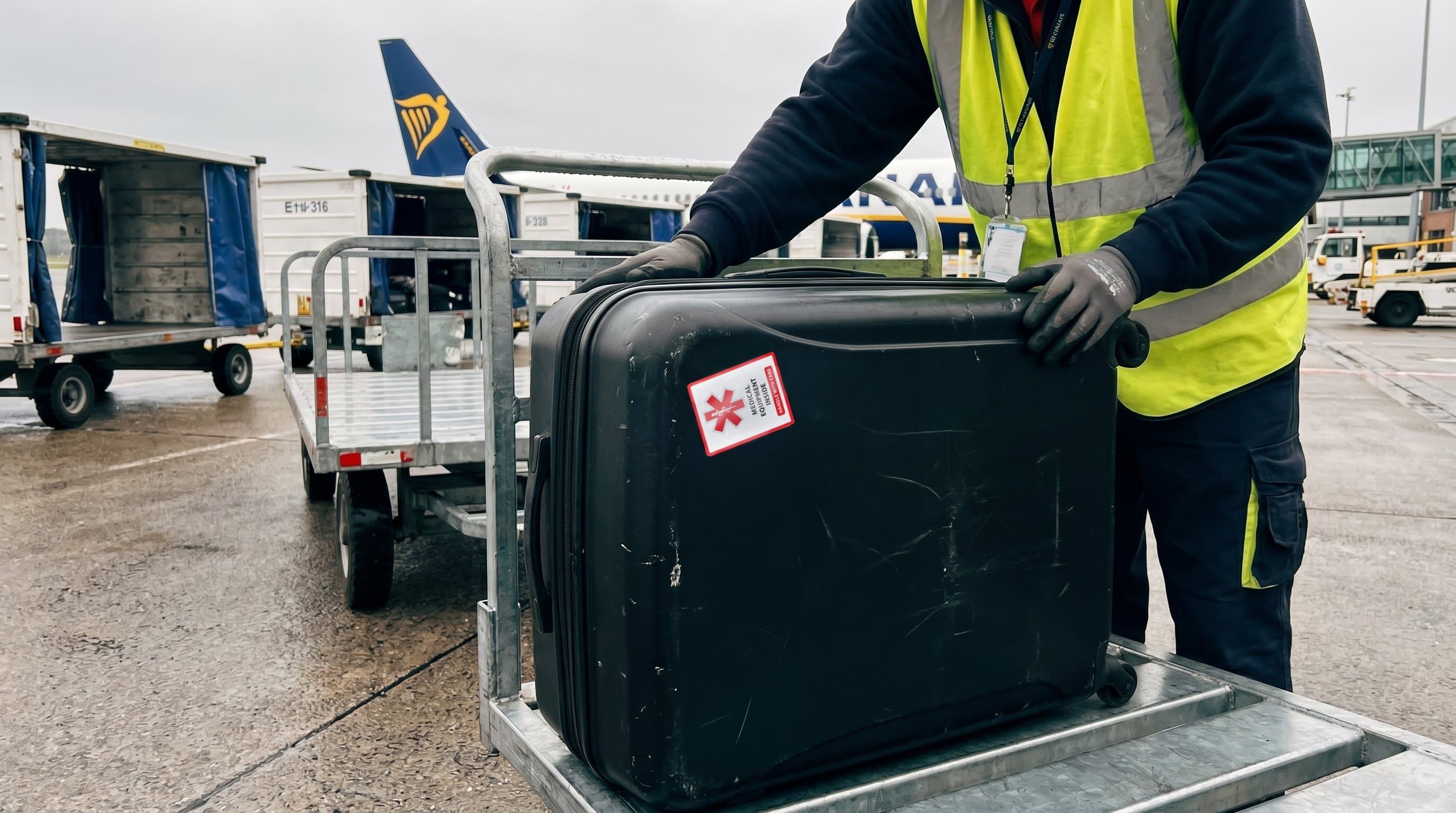
On long-hauls in business class, he plugs the AirSense 11 directly into the seat's USB-C power port. No charger required.
Scenario 02
The camper running therapy off a power bank
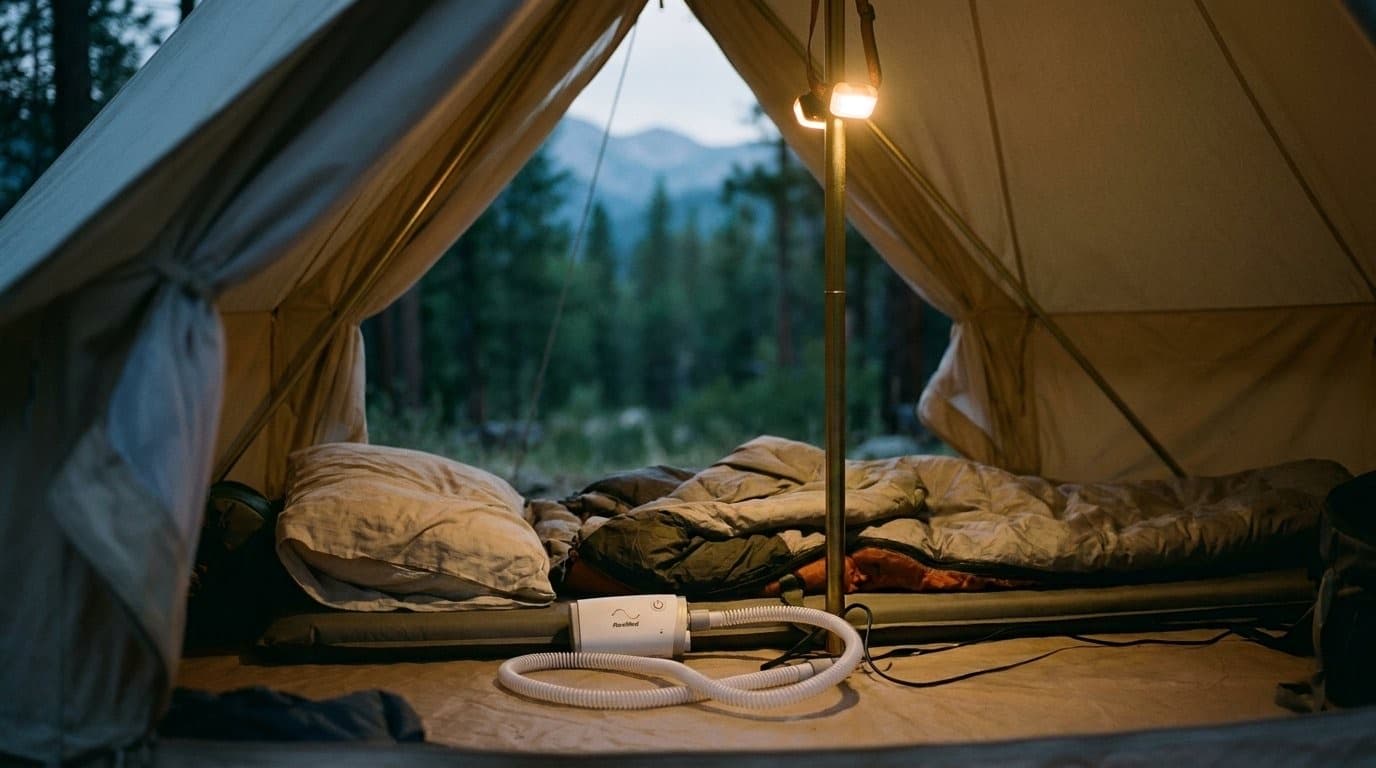
Sarah has sleep apnoea and loves camping. For a while, those two things were in conflict. She'd tried dedicated CPAP batteries — heavy, expensive, proprietary. She'd tried running an extension cord from the camp kitchen. Neither solution was elegant.
What worked: an AirMini, the Dozylab USB-C cable, and a 26,800mAh USB-C PD power bank she already owned for photography trips. With the humidifier off (the cool night air made it unnecessary anyway), the power bank ran the AirMini for two nights on a single charge. Three nights if she kept the pressure setting low.
“I can go somewhere completely off-grid and still wake up feeling like myself,” she said. “That wasn't possible before without carrying a car battery.”
The setup fits in a small dry bag she clips to the outside of her pack. Total weight added to her kit: under 200 grams.
Scenario 03
The traveller who made it work in a capsule hotel
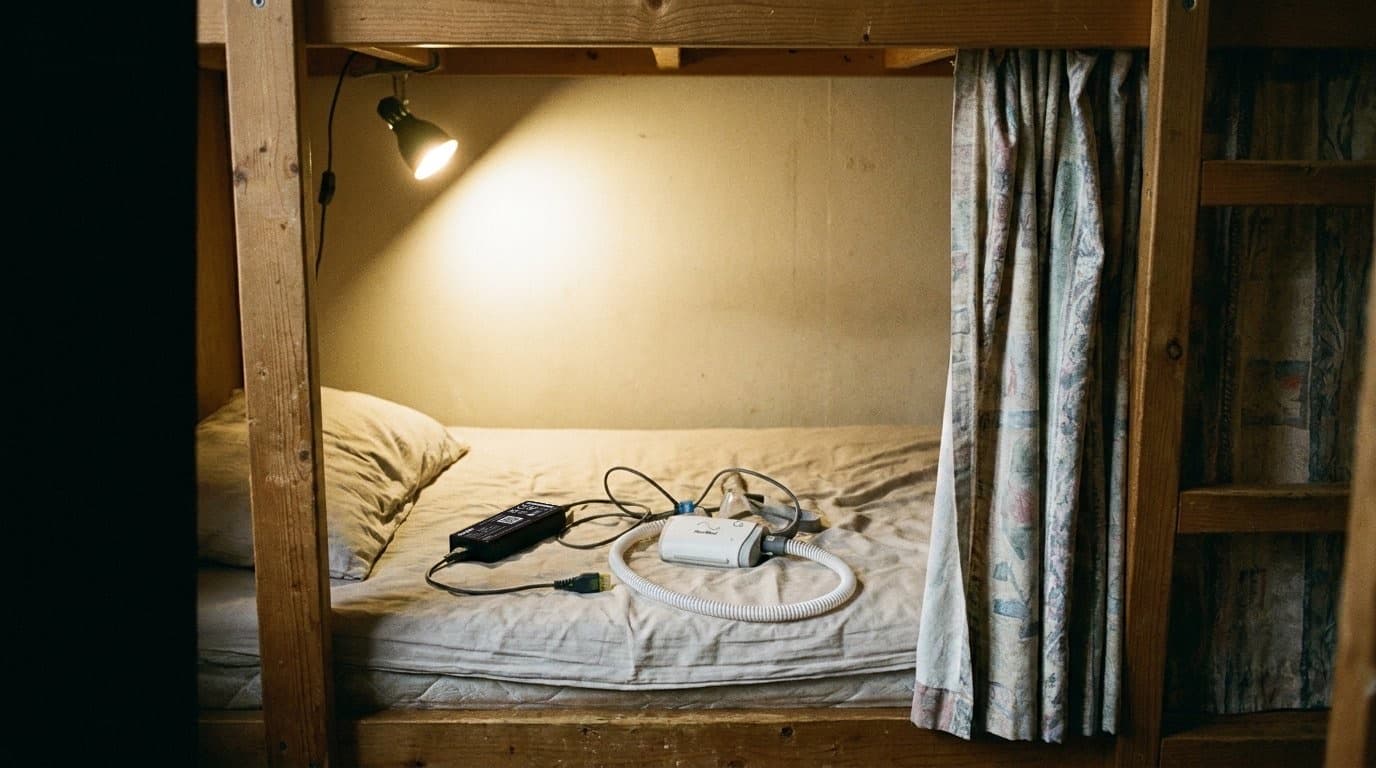
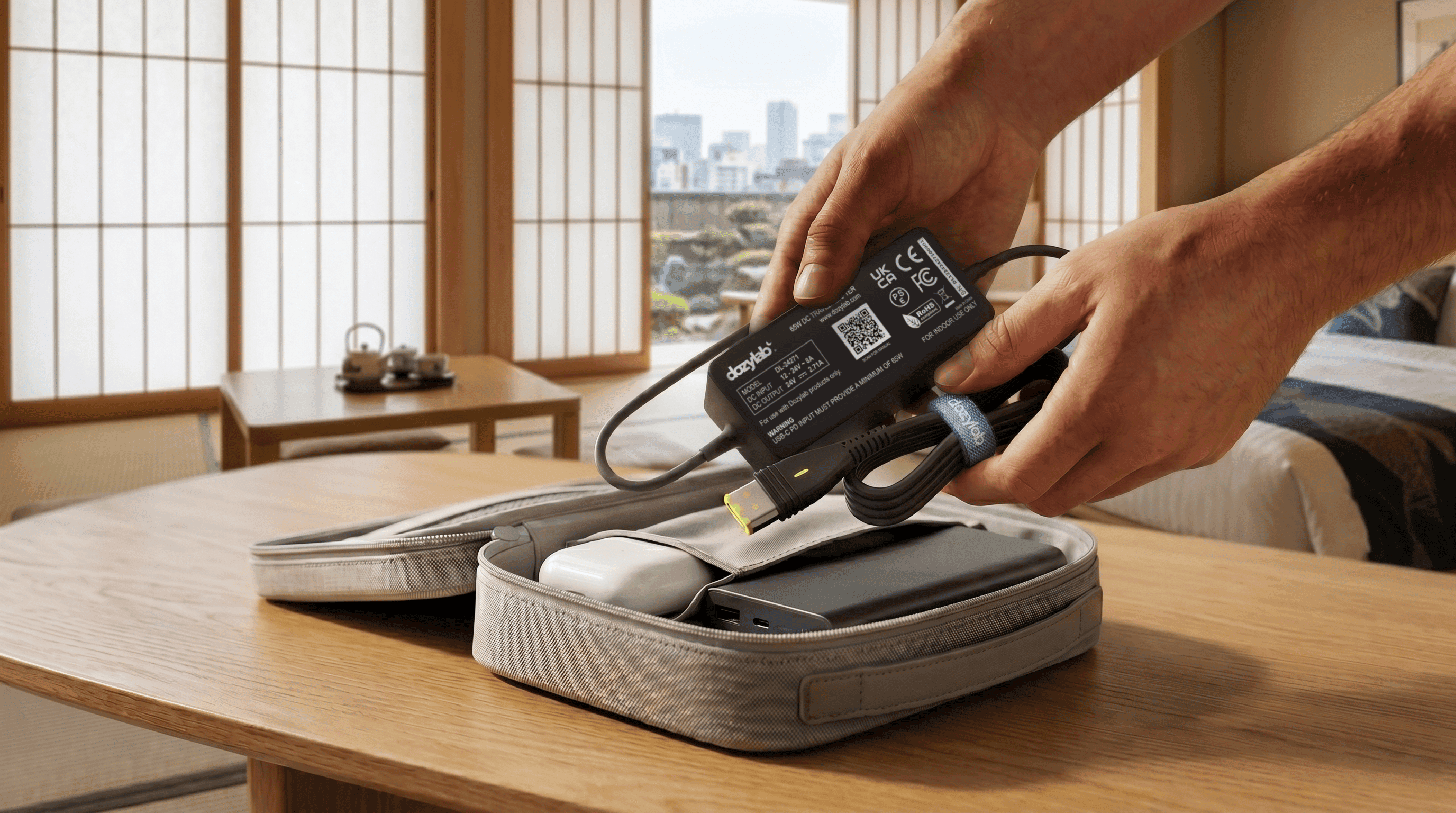
Capsule hotels in Tokyo and Osaka are extraordinary value — and they're not designed around the needs of CPAP users. A pod is roughly the size of a single bed with a privacy curtain, a small shelf, and a single USB-A port.
James travels Japan on a budget every year and had written off CPAP on those trips. Then he picked up a small USB-A to USB-C adapter for about $8. The cable runs from the pod's USB port, through the adapter, to his AirMini. It barely covers the current draw — he keeps the pressure setting at the minimum required — but it works. He wakes up rested instead of the foggy, heavy-headed feeling he'd normalised on previous trips.
“Japan is where I first realised how much I'd been tolerating skipped nights,” he told us. “Now I just bring the AirMini and the cable and figure out the power from there. There's always a USB port somewhere.”
Scenario 04
The sleeper train passenger
Overnight sleeper trains through Europe and Southeast Asia are having a renaissance. They're slow, romantic, and increasingly popular with travellers who want to avoid flying. They're also, almost universally, equipped with USB-C charging ports in the sleeping berths.
Lisa travels between Paris and Barcelona on the overnight sleeper several times a year. She used to lie awake in the berth without her CPAP, arriving exhausted. Now she plugs the AirSense 11 into the berth's USB-C port with the Dozylab cable, and the machine runs all night on train power.
“The conductor checked what it was the first time,” she said. “Once I explained it was a medical device, they didn't bother again. Now I sleep better on the train than I do in most hotels.”
The cable's compact form factor matters here — the berths have limited space, and she doesn't want a brick-and-cable setup sprawling across the fold-down table.
Scenario 05
The carry-on-only traveller who refused to check a bag
For ultra-light travellers, a CPAP power brick is a dealbreaker. It's heavy, it's bulky, and combined with the machine itself it starts to define the packing list rather than sitting within it.
Tom is a carry-on-only traveller. He takes a 40L backpack and nothing else, regardless of trip length. He has a ResMed AirMini — the smallest CPAP on the market — and he pairs it with the Dozylab USB-C cable and a slim 65W GaN charger he uses for his laptop anyway.
“The total CPAP footprint in my bag is the AirMini, one cable, and half a charger I was bringing anyway,” he said. “It's the same weight as a water bottle. I genuinely forget it's there until I need it.”
He won't check a bag. He also won't skip therapy. The USB-C cable is what makes both possible.
The common thread
These five people have different machines, different destinations, and different budgets. What they share is a simple insight: a USB-C cable is the most flexible power connector in the world, and connecting your CPAP to that ecosystem unlocks every charger, every power bank, and every USB-C port you already own.
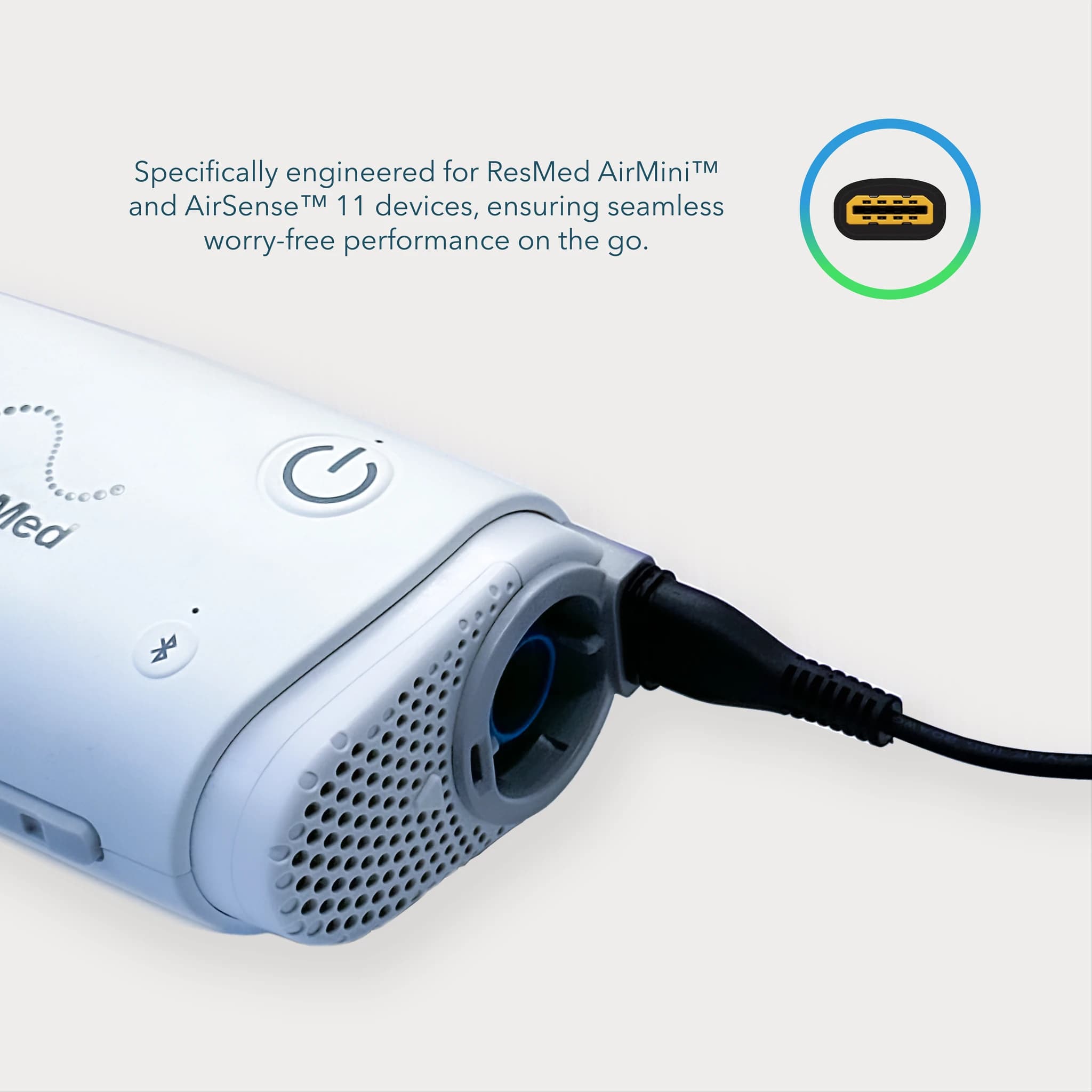
The ResMed AirMini and AirSense 11 can both run on USB-C Power Delivery. All that was missing was a cable that actually worked — certified, reliable, with active protection so you're not risking your machine on a cheap cable from a marketplace.
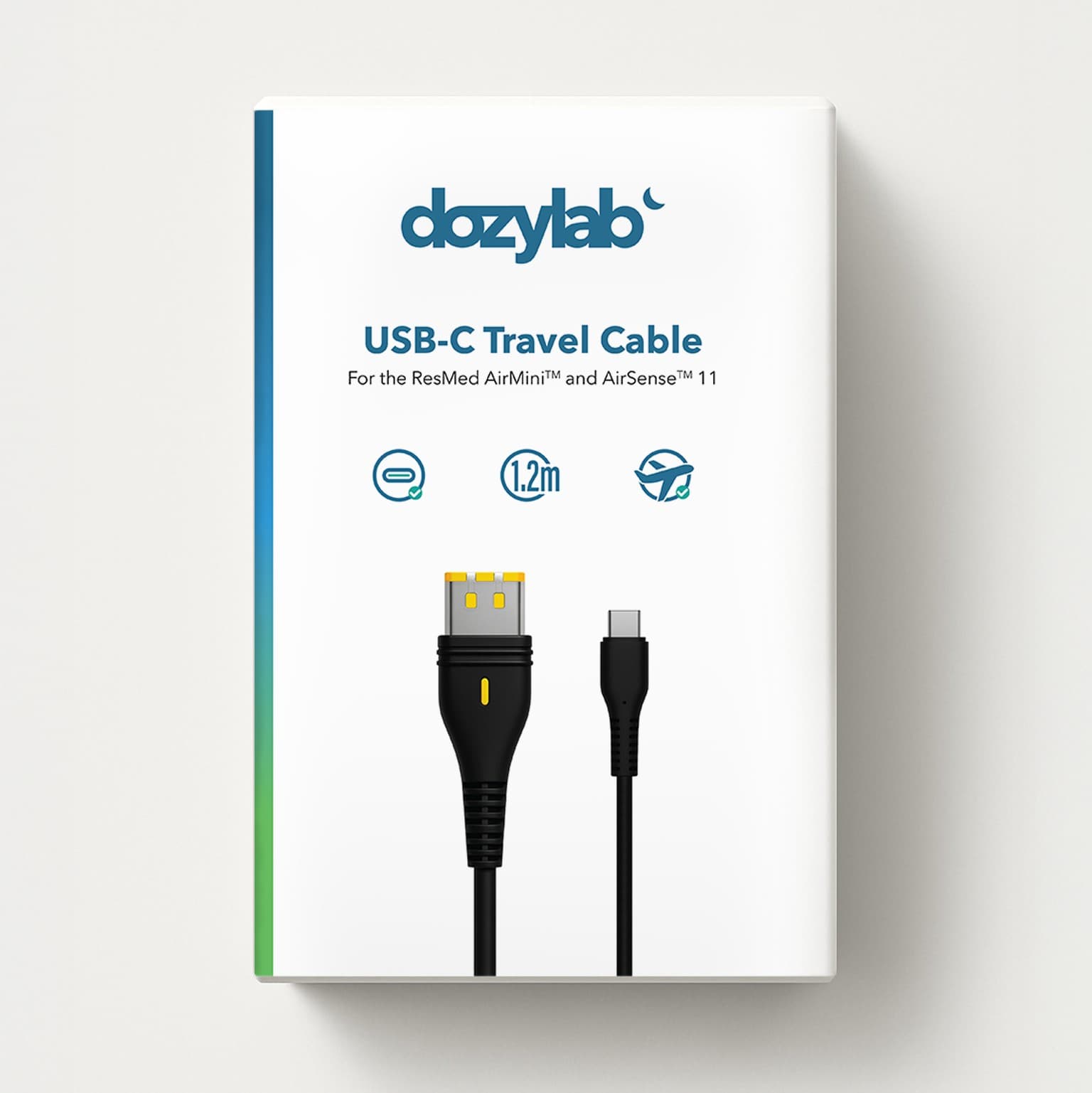
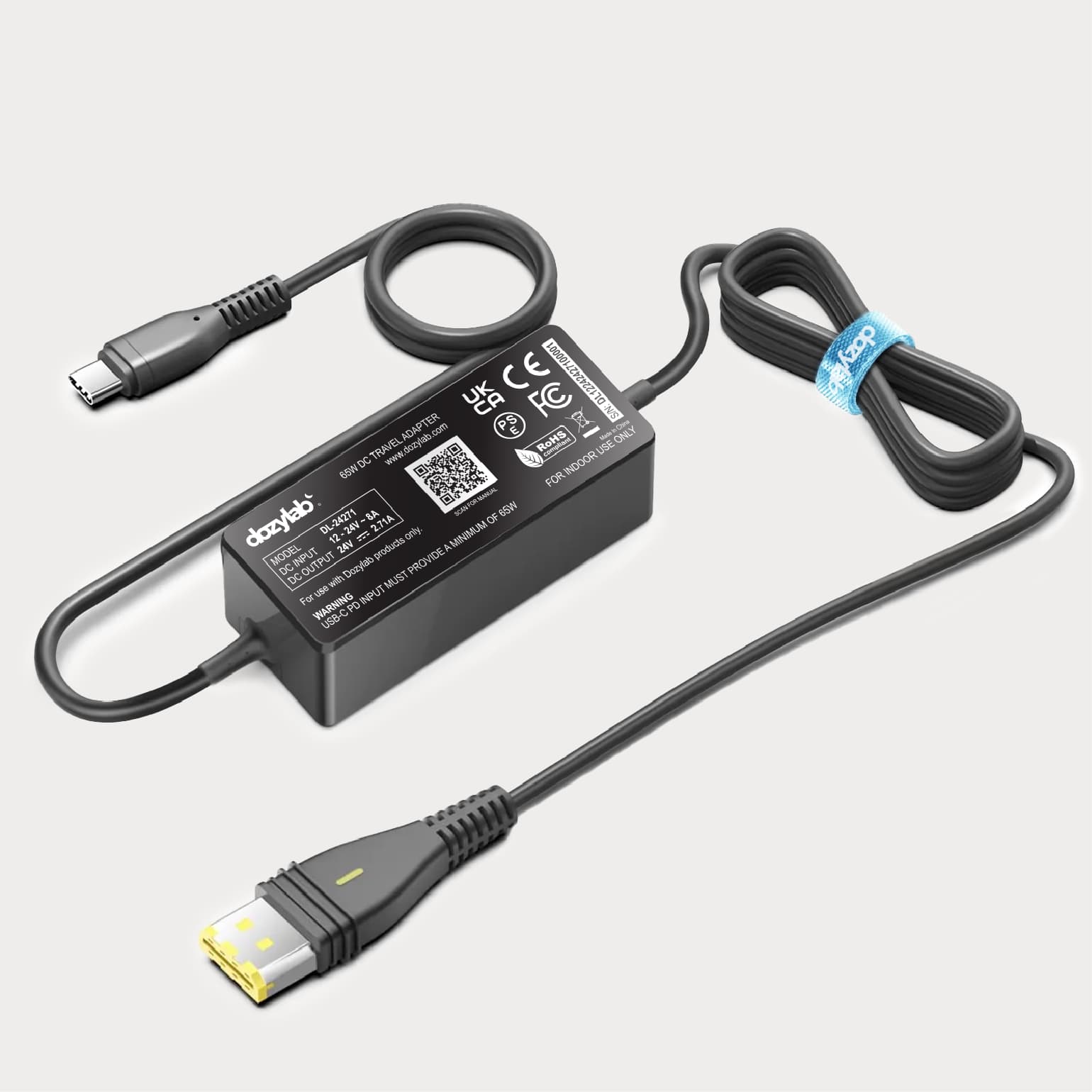
That's the Dozylab USB-C Travel Cable. Certified across four markets (FCC, CE, UKCA, PSE), RoHS compliant, with five layers of active protection. One cable, any USB-C charger, anywhere in the world.
Dozylab
USB-C CPAP Travel Cable
Compatible with ResMed AirMini and AirSense 11. Certified FCC · CE · UKCA · PSE. Five layers of active protection. Powers from any USB-C PD charger or power bank — no proprietary brick required.
View the Travel Cable